
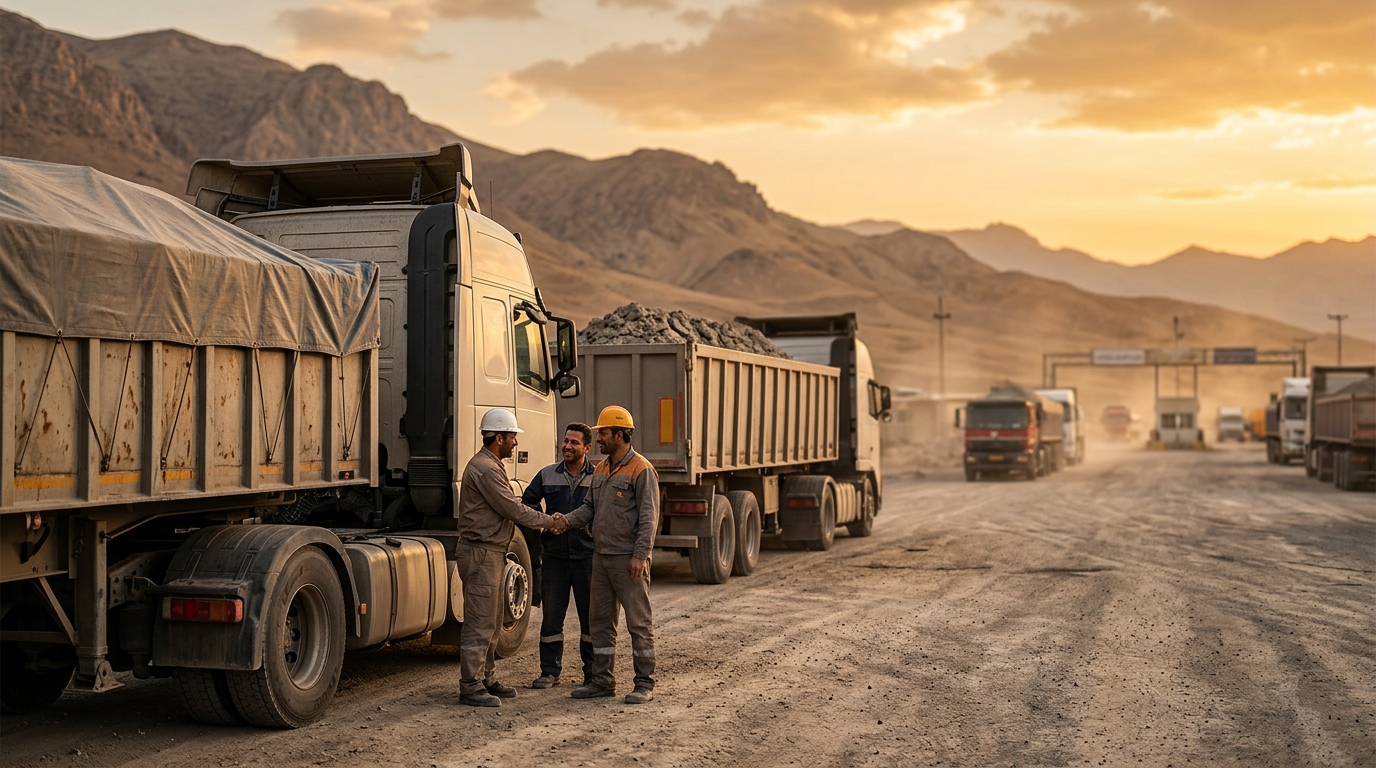
Exporting Cement Clinker from Iran to Iraq, Afghanistan, and Central Asia
Direct access to Iranian kiln lines and overland logistics routes defines the export landscape for cement clinker in the Middle East and Central Asia. Raiva International Trading Group (RAIVACO) operates as a specialized B2B exporter, supplying bulk clinker directly from certified sources to grinding plants and cement producers in these regions. This guide covers the specific export markets, logistics corridors, and product specifications that drive clinker trade from Iran.
The Clinker Export Market Landscape
Cement clinker is the sintered nodular product produced in rotary kilns from limestone and other raw materials, which is subsequently ground with gypsum to produce cement. The global market for clinker is driven by the need for high-volume, cost-effective feedstock for grinding plants that lack local limestone resources or kiln capacity. Iran holds a strategic position in this supply chain due to its vast mineral reserves and established industrial infrastructure. With over 7% of the world's mineral reserves, the country offers a robust base for industrial exports, including cementitious materials.
Iraq Export Markets and Logistics
Iraq represents one of the most significant export markets for Iranian cement clinker. The country's ongoing reconstruction and infrastructure development projects create sustained demand for cement and clinker. Iraqi buyers often source from Iran due to the short overland distance and established trade routes. The logistics for this corridor typically involve trucking from Iranian production sites to border crossings, followed by transport into Iraqi territory.
Overland Routes and Border Crossings
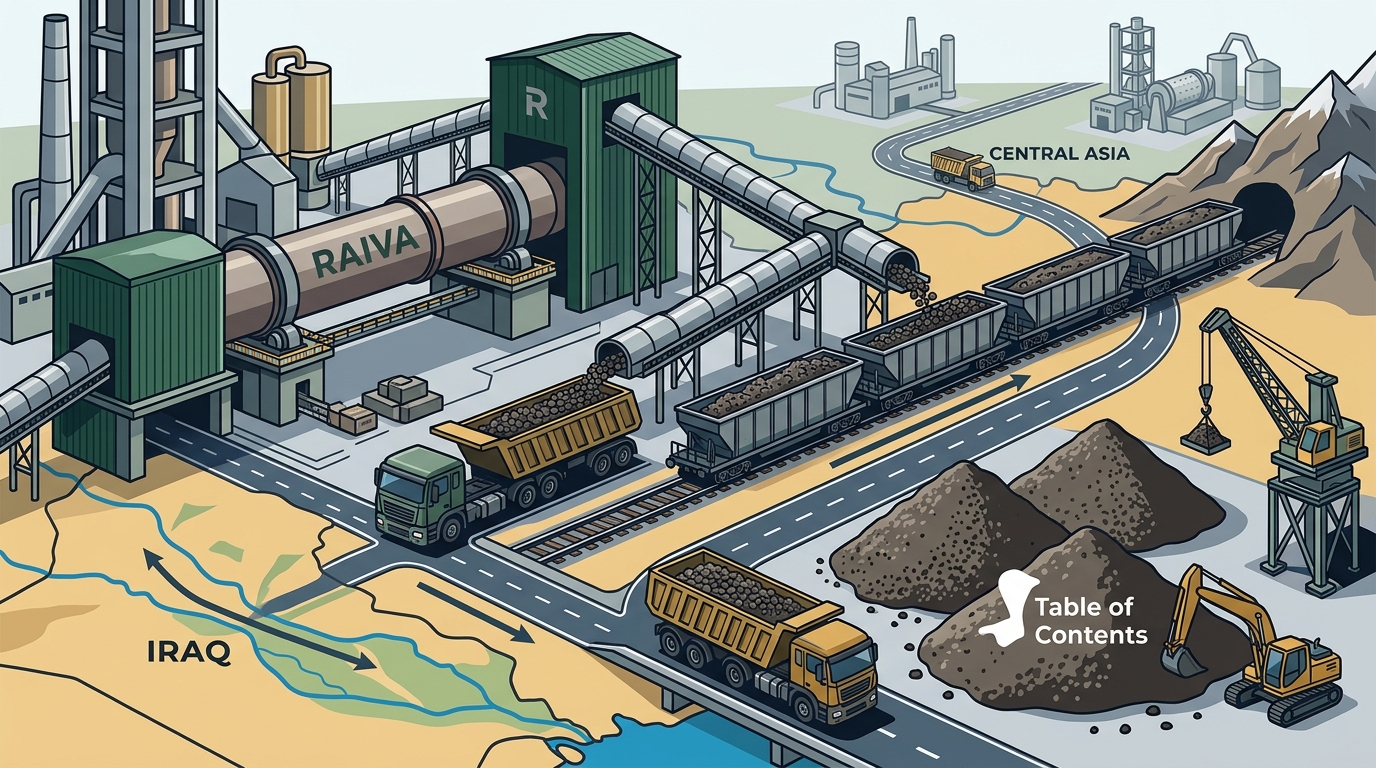
The primary logistics route for clinker exports to Iraq utilizes Iran's land borders. Raiva International Trading Group facilitates shipments via DAP (Delivered at Place) and FCA (Free Carrier) terms, using truck and rail networks across Iran's land borders. This overland approach is often more efficient for clinker than maritime shipping, given the destination's inland nature. The trade desk coordinates these movements to ensure on-schedule delivery to grinding plants and cement factories in Iraq.
Market Demand Drivers
Demand in Iraq is driven by large-scale construction projects, including housing, roads, and industrial facilities. Buyers in this region require consistent supply of clinker to maintain production lines. The ability to provide bulk shipments with a batch-specific Certificate of Analysis is a critical factor for Iraqi procurement teams. Raiva International Trading Group supports this by offering standard lead times of 7 to 14 days for standard grades, ensuring that buyers can plan their inventory effectively.
Afghanistan and Central Asia Corridors
Afghanistan and Central Asian countries such as Turkmenistan, Uzbekistan, and Kazakhstan represent another key export region for Iranian clinker. These markets often face domestic supply constraints or high production costs, making imported clinker an attractive option. The logistics for these routes involve a combination of trucking and rail, leveraging Iran's northern and western border crossings.
Logistics to Afghanistan
Exports to Afghanistan typically move through the western border crossings. The route involves trucking from Iranian kiln sites to the border, where the cargo is transferred to Afghan carriers. Raiva International Trading Group manages this handover process, ensuring that documentation and quality certificates are in order before the cargo crosses the border. The use of jumbo bags or bulk trucking depends on the specific requirements of the buyer and the destination infrastructure.
Central Asia Access
Central Asia is accessible via Iran's northern borders and rail connections. The Caspian Sea route also plays a role, although clinker is primarily moved overland for these destinations. The strategic access to international waters through the Caspian Sea and interconnected canal systems provides additional flexibility for logistics planning. Buyers in Central Asia benefit from the competitive pricing and consistent quality of Iranian clinker, which is tested to international trading standards.
Clinker Grades and Specifications
Cement clinker is available in three primary chemistries, each tailored for different cement types. Raiva International Trading Group supplies grey clinker for Types I and II, sulfate-resisting clinker for Type V, and white clinker for architectural cement. Understanding these grades is essential for buyers to select the correct feedstock for their grinding operations.
Grey Clinker for Types I and II
Grey clinker is the general-purpose feed for standard Portland cements. It is characterized by a Lime Saturation Factor (LSF) of 92 to 98. The chemical composition typically includes 63 to 67% CaO, 20 to 23% SiO2, and 4.5 to 6.5% Al2O3. This grade is suitable for structural concrete and general construction applications. The Bogue phase composition for this grade includes 50 to 60% C3S (Alite) and 15 to 22% C2S (Belite), which drive early and late strength development respectively.
Sulfate-Resisting and White Clinker
Type V sulfate-resisting clinker is designed for environments with high sulfate exposure. It holds C3A (Aluminate) to a maximum of 5%, which reduces the risk of sulfate attack. White clinker, on the other hand, is defined by its low iron content, with Fe2O3 pulled below 0.4%. This grade is used for architectural cement where the finish is the product. The Bogue phase for white clinker shows 65 to 75% C3S and less than 0.5% C4AF (Ferrite), ensuring a white fired product.
| Property | Grey Clinker (Type I/II) | Type V (SR) Clinker | White Clinker |
|---|---|---|---|
| LSF | 92 - 98 | 92 - 98 | 92 - 98 |
| CaO | 63 - 67% | 63 - 67% | 63 - 67% |
| C3A (Aluminate) | 6 - 10% | Max 5% | Not fixed |
| Fe2O3 | 2.5 - 4.5% | 2.5 - 4.5% | Max 0.4% |
| Typical Use | General Construction | Sulfate Environments | Architectural Cement |
Logistics, Incoterms, and Packaging
Effective logistics are critical for the successful export of cement clinker. Raiva International Trading Group offers flexible Incoterms, including EXW, FOB, CFR, and CIF for sea shipments, and DAP and FCA for overland routes. The choice of Incoterm depends on the buyer's location and preferred risk allocation. For Iraq and Central Asia, overland terms are often preferred due to the proximity of the markets.
Packaging Options
Clinker is typically shipped in bulk vessels for sea freight or in jumbo bags for container and truck shipments. The minimum order quantity for bagged clinker is 1 x 20 ft container (approx. 25 MT), while bulk vessel shipments require a minimum of 500 MT. Trial quantities are available for qualification purposes. Every shipment includes a batch mill certificate with the actual oxide analysis, ensuring transparency and quality assurance.
Certification and Quality Control
Quality control is a non-negotiable aspect of clinker exports. Raiva International Trading Group ensures that every batch is lab-tested and shipped with a Certificate of Analysis. The certificate reports key parameters such as LSF, Silica Modulus (SM), and Alumina Modulus (AM). These figures allow buyers to verify that the clinker meets their specific grinding requirements. Third-party inspection is available upon request, providing an additional layer of assurance for international buyers.
Key Takeaways
- Iraq and Central Asia are primary export markets for Iranian cement clinker due to geographic proximity and sustained demand.
- Overland logistics via truck and rail are the preferred methods for shipping clinker to Iraq and Afghanistan.
- Three main clinker grades are available: Grey (Type I/II), Sulfate-Resisting (Type V), and White.
- Grey clinker has an LSF of 92-98 and is suitable for general construction.
- Type V clinker holds C3A to max 5% for sulfate resistance.
- White clinker has Fe2O3 below 0.4% for architectural applications.
- Minimum order quantities are 25 MT for bagged and 500 MT for bulk vessel shipments.
- Every shipment includes a batch mill certificate with detailed oxide analysis.
Frequently Asked Questions
What are the main logistics routes for clinker exports to Iraq?
The main routes utilize Iran's land borders, with trucking from production sites to border crossings followed by transport into Iraq. Raiva International Trading Group facilitates these shipments under DAP and FCA terms.
What is the minimum order quantity for cement clinker?
The minimum order quantity is 1 x 20 ft container (approx. 25 MT) for bagged clinker and 500 MT for bulk vessel shipments. Trial quantities are available for qualification.
What specifications are provided with clinker shipments?
Every shipment includes a batch mill certificate with the actual oxide analysis, including LSF, SM, and AM. This ensures that the clinker meets the buyer's grinding requirements.
Can clinker be shipped to Central Asia?
Yes, clinker can be shipped to Central Asia via overland routes through Iran's northern borders and rail connections. The Caspian Sea route also provides additional flexibility for logistics planning.
What is the difference between Grey and White clinker?
Grey clinker is for general construction and has higher iron content. White clinker has Fe2O3 below 0.4% and is used for architectural cement where whiteness is required.
How long is the lead time for clinker shipments?
The standard lead time for clinker shipments is 7 to 14 days. This allows buyers to plan their inventory and production schedules effectively.
What Incoterms are available for clinker exports?
Available Incoterms include EXW, FOB, CFR, and CIF for sea shipments, and DAP and FCA for overland routes. The choice depends on the buyer's location and risk preferences.
Conclusion
Exporting cement clinker from Iran to Iraq, Afghanistan, and Central Asia requires a partner with direct access to resources and robust logistics capabilities. Raiva International Trading Group provides this expertise, ensuring that buyers receive consistent quality and reliable supply. To plan your visit or request a quote for cement clinker, .