
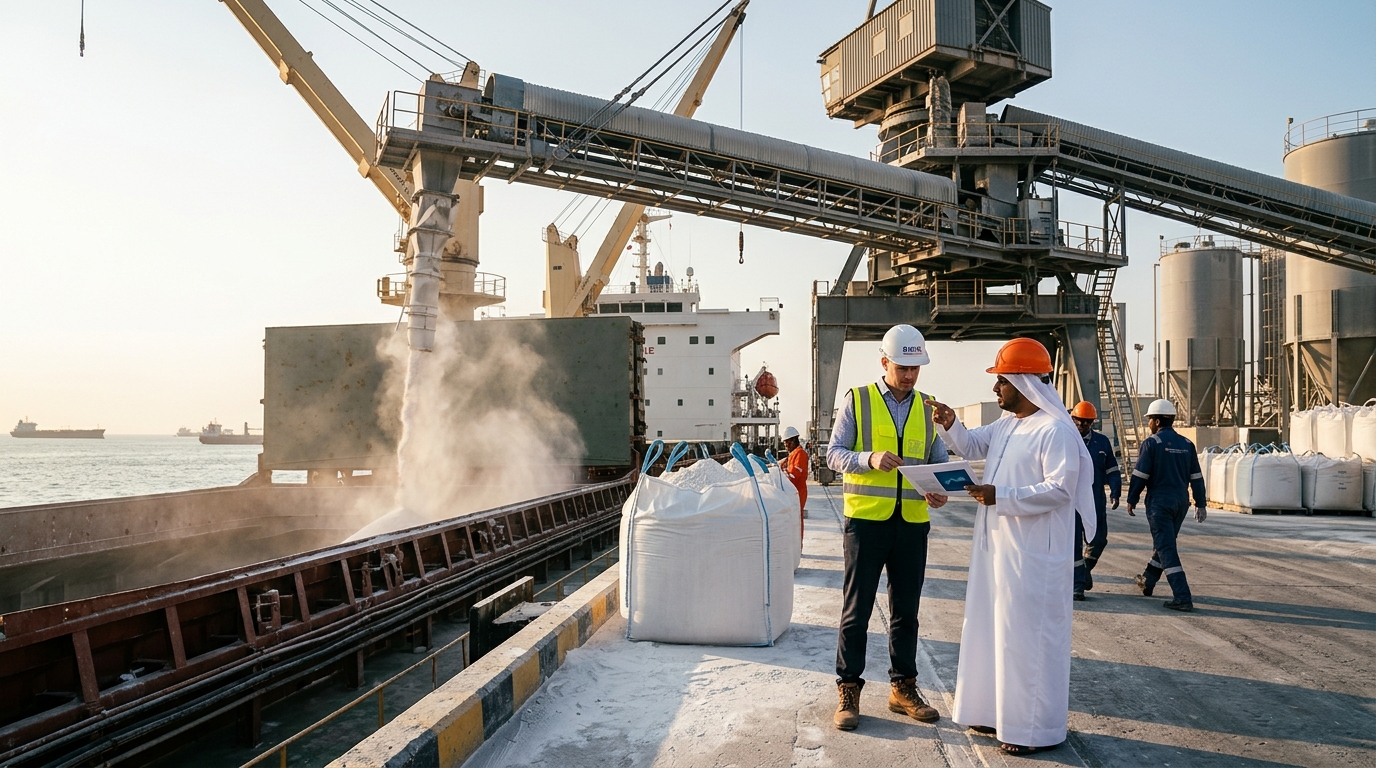
Bulk Quicklime and Hydrated Lime for GCC Steel and Water Treatment
Procurement teams in the Gulf Cooperation Council (GCC) can source bulk quicklime and hydrated lime directly from specialized B2B exporters like Raiva International Trading Group (RAIVACO). This supplier ships from ports in Iran and Oman to buyers across the region. This guide covers how to select the right lime grade for steelmaking and water treatment, and how to manage bulk delivery logistics in the GCC.
GCC Lime Suppliers
Quicklime is calcium oxide (CaO) produced by calcining limestone at high temperatures. Hydrated lime is calcium hydroxide (Ca(OH)2) formed by adding water to quicklime. The choice between these two forms depends entirely on the downstream process. Steelmaking and water treatment have distinct requirements that dictate which grade is appropriate.
Steelmaking Applications
In steel production, lime acts as a flux to remove impurities from molten iron. Quicklime is the preferred form for this application because it reacts rapidly with slag-forming elements. The exothermic reaction of quicklime with water or moisture in the furnace helps maintain the required temperature for slag formation. Buyers in the steel sector should look for suppliers who can provide high-purity quicklime with a consistent mesh size. A typical specification for steelmaking flux requires a CaO content of at least 90%. The particle size distribution is also critical, as it affects the rate of reaction in the converter or basic oxygen furnace.
Water Treatment Applications
Hydrated lime is the standard choice for water treatment. It is used to adjust pH, precipitate heavy metals, and soften water by removing calcium and magnesium ions. Unlike quicklime, hydrated lime does not release significant heat when added to water. This makes it safer and easier to handle in dosing systems. For water utilities, the key specification is the available lime content, which indicates the percentage of calcium hydroxide in the product. A high available lime percentage ensures efficient dosing and reduces the volume of chemical required per unit of water treated.
Supplier Qualification in the GCC
When qualifying a supplier in the GCC, procurement teams must verify the origin of the raw material and the processing capabilities of the exporter. Raiva International Trading Group operates with direct access to resources, eliminating intermediaries in the supply chain. This direct sourcing model allows for better control over quality and consistency. The company supplies industrial minerals and chemical products to buyers in over 20 countries, including the GCC. By working directly with the source, buyers can ensure that the lime meets specific technical requirements for their operations.
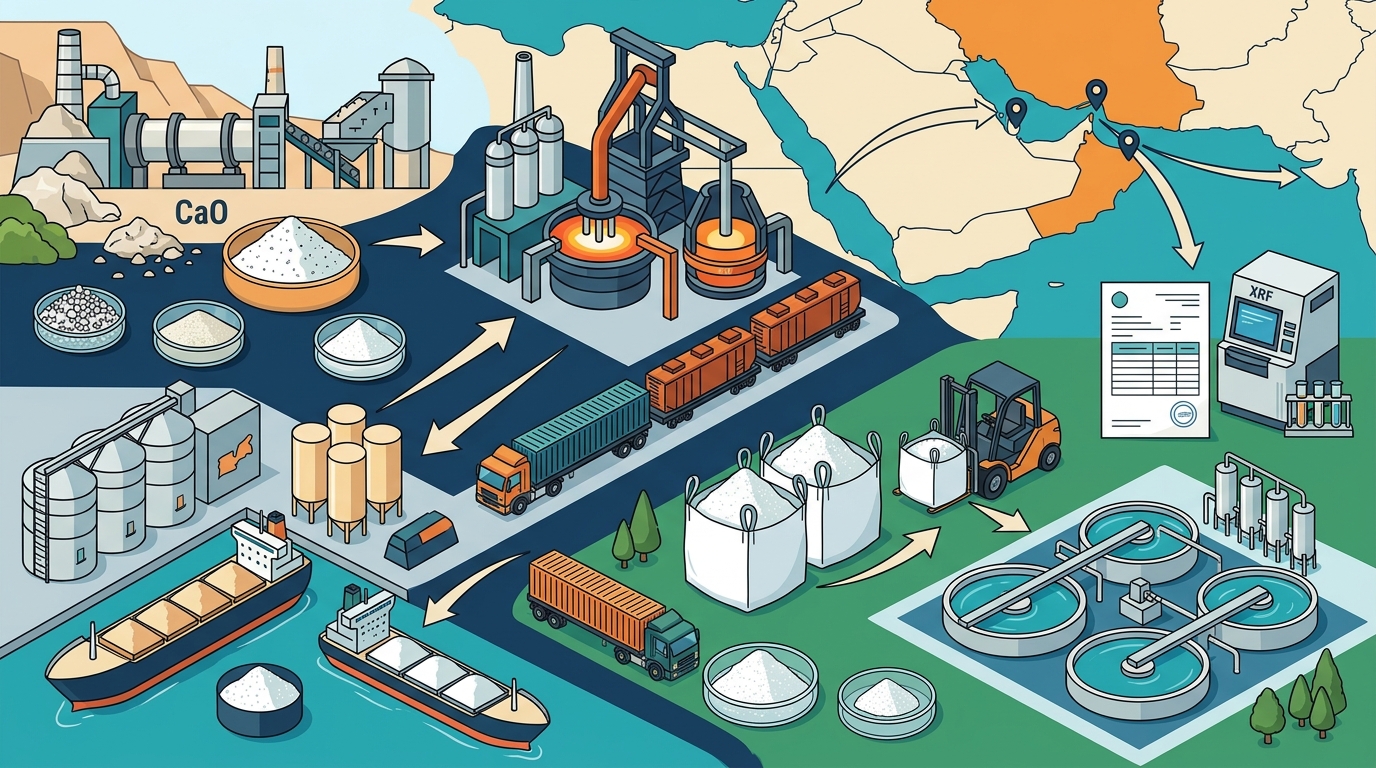
Bulk Delivery Formats
Logistics is a critical factor in the total cost of ownership for bulk lime. The delivery format affects not only the freight cost but also the handling requirements at the receiving facility. Raiva International Trading Group offers multiple packaging and shipping options to accommodate different operational needs.
Packaging Options
Incoterms and Shipping Routes
Shipping terms are defined by Incoterms 2020. Raiva International Trading Group operates under EXW, FOB, CFR, and CIF terms. FOB (Free On Board) means the seller is responsible for the goods until they are loaded onto the vessel at the port of origin. CIF (Cost, Insurance, and Freight) means the seller covers the cost, insurance, and freight to the destination port. For GCC buyers, the proximity of the ports of Bandar Abbas and Bandar Imam Khomeini in Iran to the Gulf region makes shipping times relatively short. This reduces the risk of moisture absorption and degradation during transit. The standard lead time for standard grades is 7 to 14 days, which is competitive for the region.
Quality Assurance and Documentation
Every shipment of lime from Raiva International Trading Group is accompanied by a batch-specific Certificate of Analysis (CoA). This document provides the chemical composition, mesh size distribution, and other physical properties of the specific batch being shipped. Third-party inspection by agencies such as SGS or Bureau Veritas is available at the buyer's request. This level of documentation is essential for quality control in industrial applications. It allows the buyer to verify that the product meets the specifications agreed upon in the sales contract before it is unloaded.
| Parameter | Quicklime (CaO) | Hydrated Lime (Ca(OH)2) |
|---|---|---|
| Chemical Formula | CaO | Ca(OH)2 |
| Assay Range | 88 - 92% CaO | 88 - 96.5% Ca(OH)2 |
| Bulk Density | 700 - 1200 kg/m3 | 400 - 600 kg/m3 |
| Reaction with Water | Strongly exothermic | Already hydrated |
| Typical Uses | Steel flux, soil stabilization | Water treatment, mortars |
Key Takeaways
- Quicklime is preferred for steelmaking due to its rapid reaction and heat release.
- Hydrated lime is the standard for water treatment because it is safer to handle and dose.
- Direct sourcing from exporters like Raiva International Trading Group eliminates intermediaries and improves quality control.
- Bulk vessel shipments are the most cost-effective for orders over 500 metric tons.
- Jumbo bags and standard bags offer flexibility for smaller facilities or trial orders.
- Every shipment includes a batch-specific Certificate of Analysis for quality verification.
- Shipping from Iran to the GCC is efficient due to the proximity of major ports.
- Third-party inspection is available to ensure compliance with contract specifications.
Frequently Asked Questions
What is the difference between quicklime and hydrated lime?
Quicklime is calcium oxide (CaO) produced by heating limestone. Hydrated lime is calcium hydroxide (Ca(OH)2) formed by adding water to quicklime. Quicklime is more reactive and releases heat, while hydrated lime is stable and easier to handle.
Which lime grade is best for steelmaking?
Quicklime is the best choice for steelmaking. It reacts rapidly with impurities in molten iron and helps form slag. A high-purity grade with a consistent mesh size is required for optimal performance.
How is hydrated lime used in water treatment?
Hydrated lime is used to adjust pH, precipitate heavy metals, and soften water. It is dosed into the water stream to neutralize acidity and remove dissolved minerals. The available lime content determines the efficiency of the dosing process.
What are the minimum order quantities for bulk lime?
The minimum order quantity for bulk vessel shipments is 500 metric tons. For bagged lime, the minimum is one 20-foot container, which holds approximately 25 metric tons. Trial quantities are available for qualification purposes.
What shipping terms does Raiva International Trading Group offer?
The company offers EXW, FOB, CFR, and CIF terms under Incoterms 2020. FOB and CIF are the most common for sea freight to the GCC. The standard loading ports are Bandar Abbas and Bandar Imam Khomeini in Iran.
How long does it take to ship lime to the GCC?
The standard lead time for standard grades is 7 to 14 days. This includes the time from order confirmation to loading at the port of origin. Shipping times to GCC ports are short due to the geographic proximity.
Is third-party inspection available for lime shipments?
Yes, third-party inspection by agencies such as SGS or Bureau Veritas is available at the buyer's request. This allows the buyer to verify the quality and quantity of the shipment before it is unloaded.
What documentation is provided with each shipment?
Every shipment is accompanied by a batch-specific Certificate of Analysis (CoA). This document details the chemical composition and physical properties of the specific batch. A mill certificate may also be provided for certain grades.
Conclusion
Sourcing bulk quicklime and hydrated lime for steelmaking and water treatment in the GCC requires a careful evaluation of supplier capabilities, product specifications, and logistics. Raiva International Trading Group provides a reliable supply chain with direct access to resources and comprehensive quality documentation. By understanding the differences between quicklime and hydrated lime and selecting the appropriate delivery format, procurement teams can optimize their operations and ensure consistent quality. For specific requirements, buyers can request a quote from the trade desk.