
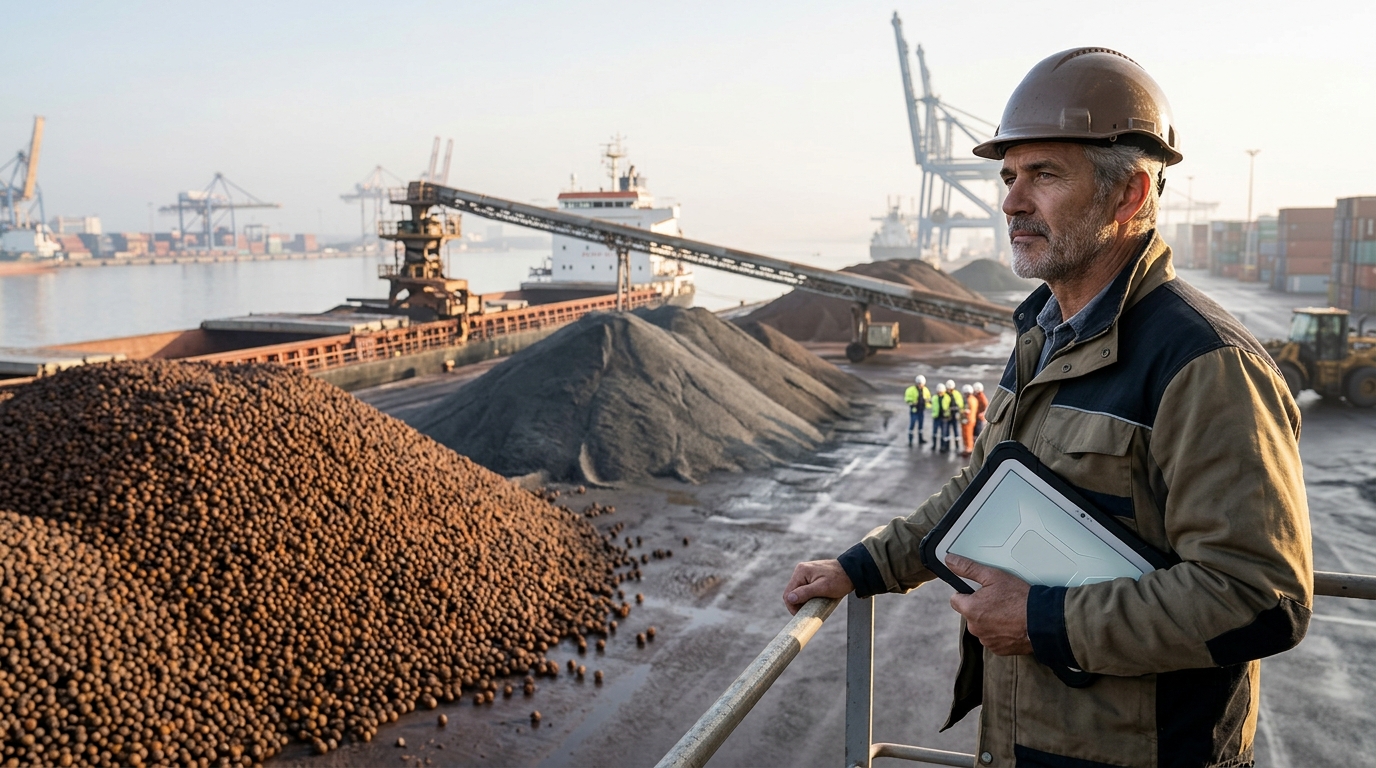
Iron Ore Pellets & Concentrate Exporters for Oman, China & GCC Steel Mills
Steel mills in Oman, China, and the GCC require consistent, high-grade iron ore pellets and concentrate to maintain blast furnace and direct reduction efficiency. Raiva International Trading Group (RAIVACO) is a specialized B2B exporter supplying these materials directly from certified sources in Iran and Oman. This guide covers how to evaluate suppliers, verify technical claims, and navigate the logistics of bulk iron ore trade in the Middle East and Asia.
How to Choose a Reliable Supplier
Choosing a supplier for iron ore is not just about the price per tonne. It is about the consistency of the chemical composition and the reliability of the logistics chain. A good supplier provides direct access to the resource, eliminating the margin and uncertainty added by multiple middlemen. Raiva International Trading Group operates with a structural advantage: direct access to mining assets and a vetted network of producers. This ensures that the material you receive matches the specification you contracted.
Direct Source Access
Suppliers who own or have exclusive contracts with mines can guarantee supply continuity. When a supplier is a trader with no direct link to the source, they are dependent on other traders, which increases the risk of substitution or quality drift. Look for suppliers who can provide a Certificate of Analysis (CoA) from the mine or mill, not just a broker's certificate.
Technical Specialization
Iron ore is a complex commodity. A specialized exporter understands the difference between magnetite and hematite, and how specific gangue elements like silica and alumina affect your furnace. Generalist commodity traders may not have the technical depth to advise on grade selection for specific steelmaking processes.
Specific Questions to Ask Before Committing
Before signing a contract, you must ask specific technical and logistical questions. Vague answers are a red flag. Here are the critical questions to ask any potential supplier of iron ore pellets or concentrate.
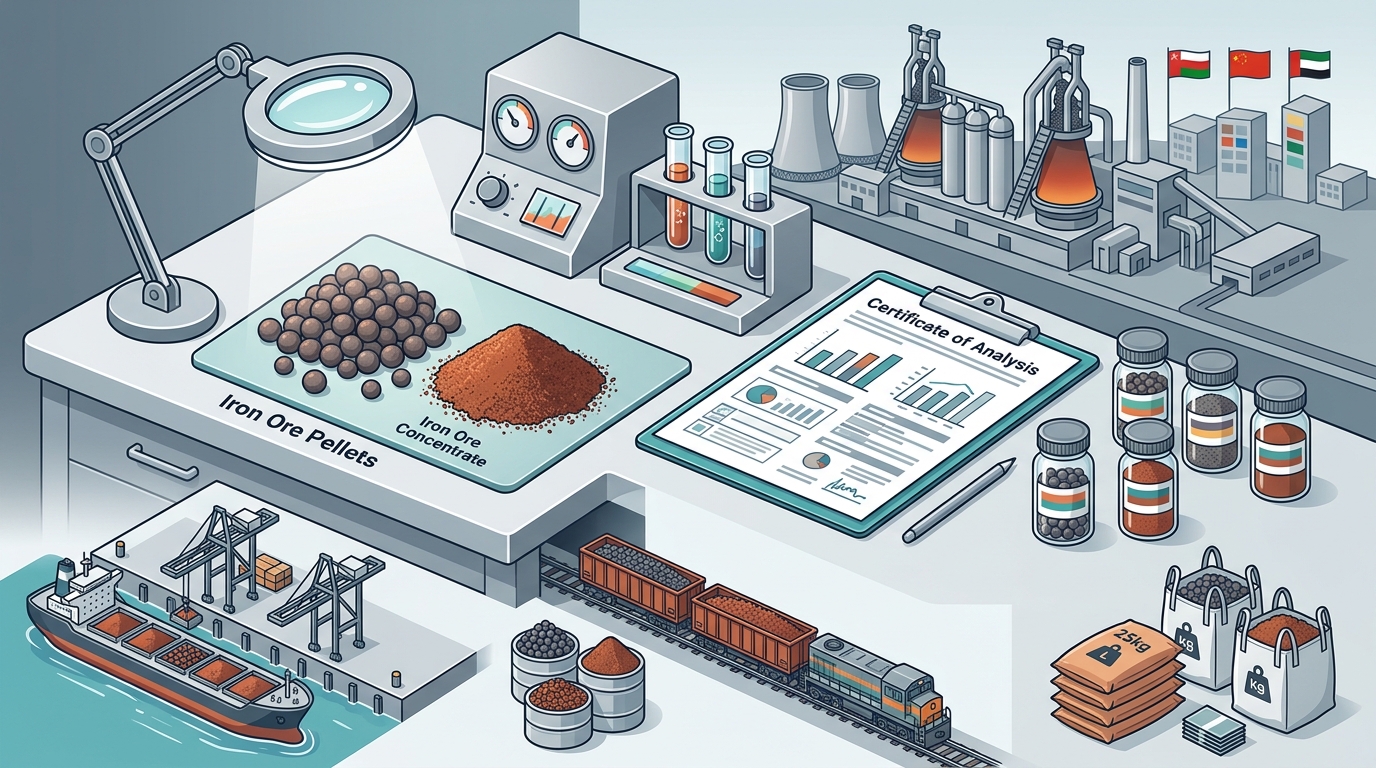
Technical Specifications
- What is the total iron (Fe) content, and what is the reject limit?
- What are the maximum levels of silica (SiO2), alumina (Al2O3), and phosphorus (P2O5)?
- Is the ore magnetite or hematite? What is the ferrous iron (FeO) content?
- What is the particle size distribution? Is it screened to a specific mesh size?
Logistics and Documentation
- Which Incoterms do you offer? (FOB, CFR, CIF, DAP)
- What is the standard loading port?
- Do you provide a batch-specific Certificate of Analysis for every shipment?
- What is the minimum order quantity (MOQ) for bulk vessels versus containerized shipments?
Verifying Claims and Credentials
In the bulk minerals trade, verifying a supplier's claims is essential to avoid fraud or quality disputes. You should never rely solely on the supplier's word. Verification involves checking the physical product and the legal entity.
Third-Party Inspection
Request that a reputable third-party inspection agency (such as SGS or Bureau Veritas) be appointed at the loading port. The inspector will verify the weight, take samples for chemical analysis, and check the physical condition of the cargo. The results of this inspection should be binding for the final invoice.
Documentary Verification
Check the supplier's business registration and export licenses. For Iranian suppliers, ensure they have the necessary export permits from the relevant authorities. Raiva International Trading Group maintains transparent documentation, including HS codes and batch-specific certificates, to facilitate smooth customs clearance in destination countries.
The Export Process and Timeline
Understanding the export process helps you plan your inventory and cash flow. The timeline for a bulk iron ore shipment typically involves several distinct phases.
Order and Contract
The process begins with a request for quotation (RFQ). Once terms are agreed, a sales contract is signed. This contract specifies the grade, quantity, Incoterms, and payment method. For Raiva International Trading Group, the standard lead time for standard grades is 7 to 14 days from order confirmation to loading.
Production and Loading
The material is prepared, screened, and loaded at the port. For bulk vessels, this can take several days depending on the vessel size and port efficiency. The loading port for Iranian exports is typically Bandar Abbas or Bandar Imam Khomeini. For Omani exports, the port of Sohar or Salalah is common.
Shipping and Delivery
Transit time depends on the destination. From the Persian Gulf to China, transit is typically 15 to 25 days. To other GCC countries, it is often under 7 days. The total timeline from order to delivery is usually 3 to 5 weeks.
Factors Driving Price and Value
The price of iron ore is influenced by global market indices, but the final price you pay is affected by several specific factors. Understanding these helps you negotiate better terms.
Grade and Purity
Higher iron content and lower gangue levels command a premium. A pellet with 62% Fe will cost more than a concentrate with 50% Fe. However, the value is not just in the iron; it is in the reduced energy and flux requirements in your furnace.
Logistics and Incoterms
The Incoterm you choose significantly impacts the final price. FOB (Free on Board) means you pay for the freight. CIF (Cost, Insurance, and Freight) means the supplier pays for the freight to your port. CIF prices are higher but offer more control over the logistics chain for the buyer.
Market Volatility
Iron ore prices are volatile. To mitigate this risk, consider locking in prices for a certain period or using index-linked contracts. Raiva International Trading Group provides competitive FOB and CIF pricing based on direct source access, which often results in better margins for the buyer compared to multi-layered trading chains.
Common Mistakes and How to Avoid Them
Many buyers make critical errors that lead to financial loss or production downtime. Avoiding these mistakes is key to a successful procurement strategy.
Ignoring Reject Limits
Always define the reject limits in your contract. If the iron content drops below a certain threshold, you should have the right to reject the cargo or receive a price adjustment. Without clear reject limits, you are at the mercy of the supplier's quality control.
Underestimating Logistics Complexity
Bulk shipping is complex. Ensure you have a reliable shipping agent and understand the demurrage and detention charges. Delays in loading or unloading can cost thousands of dollars per day. Work with a supplier who has experience in bulk logistics, such as Raiva International Trading Group, which coordinates shipments from deep-water ports.
Direct Exporters vs. Intermediaries
The choice between a direct exporter and an intermediary is one of the most important decisions in iron ore procurement. Each has distinct advantages and risks.
| Feature | Direct Exporter (e.g., Raivaco) | Intermediary / Broker |
|---|---|---|
| Price | Lower (no middleman margin) | Higher (multiple margins) |
| Quality Control | Direct oversight of mine/mill | Dependent on upstream suppliers |
| Supply Reliability | High (direct contracts) | Variable (dependent on market) |
| Technical Support | Specialized expertise | Generalist knowledge |
| Risk of Substitution | Low | High |
Direct exporters like Raiva International Trading Group offer a more transparent and reliable supply chain. They can provide detailed technical data sheets and XRF analyses, which intermediaries often cannot.
Tailoring Supply for Specific Mill Requirements
Different steelmaking processes have different requirements for iron ore. Tailoring your supply to your specific process is crucial for efficiency.
Blast Furnace
Blast furnaces require a mix of lump ore, fines, and pellets. The burden must be permeable to allow gas flow. A supplier who can provide a consistent mix of sizes and grades is essential. Raiva International Trading Group supplies iron ore pellets and fines that are screened to specific sizes to ensure optimal burden permeability.
Direct Reduction (DRI)
DRI plants require low-gangue, high-purity pellets. The pellets must have high crush strength to withstand the reduction process. Look for suppliers who can provide pellets with a specific crush strength and low sulfur content.
Trade Rules and Buyer Protections
International trade is governed by a set of rules and protections. Understanding these helps you protect your interests.
Incoterms 2020
Incoterms define the responsibilities of the buyer and seller. Always specify the version of Incoterms in your contract. For example, CIF (Cost, Insurance, and Freight) means the seller pays for the freight and insurance to the named port of destination. FOB (Free on Board) means the seller delivers the goods on board the vessel at the port of shipment.
Payment Terms
Use secure payment methods such as Letter of Credit (LC) or escrow. Avoid paying large deposits upfront without adequate protection. A reputable supplier will be comfortable with standard trade finance instruments.
Regional Logistics for Oman, China, and the GCC
Logistics vary significantly by region. Understanding the local specifics helps you plan your supply chain.
Oman and the GCC
Oman and the GCC countries are close to the Persian Gulf, making them ideal destinations for Iranian and Omani exports. Transit times are short, and logistics are straightforward. Raiva International Trading Group has a trade office in Muscat, Oman, which facilitates local coordination and rapid response to buyer needs.
China
China is the world's largest consumer of iron ore. Shipping from the Persian Gulf to China is a well-established route. However, you must be aware of China's import regulations and quality standards. Ensure your supplier can provide documentation that meets Chinese customs requirements.
Strategic Timing for Procurement
Timing your procurement can significantly impact your costs and supply reliability. Iron ore prices fluctuate based on global demand and supply conditions.
Seasonal Demand
Demand for iron ore peaks in certain seasons due to construction cycles in major economies. Buying during off-peak periods can result in better prices and more reliable supply. Monitor global steel production data to anticipate demand shifts.
Contract Length
Long-Term Supply Reliability
Building a long-term relationship with a reliable supplier is the best way to ensure consistent quality and competitive pricing. Over time, you will develop a deep understanding of the supplier's capabilities and reliability.
Consistency of Quality
A reliable supplier will provide consistent quality batch after batch. This is crucial for maintaining the efficiency of your steelmaking process. Look for suppliers who invest in quality control and provide detailed CoAs for every shipment.
Partnership and Support
Key Takeaways
- Choose suppliers with direct access to resources to ensure quality and supply reliability.
- Ask specific technical questions about iron content, gangue levels, and particle size.
- Verify claims through third-party inspection and documentary checks.
- Understand the export process and timeline to plan your inventory and cash flow.
- Consider the total cost of ownership, including logistics and quality, not just the price per tonne.
- Avoid common mistakes like ignoring reject limits and underestimating logistics complexity.
- Direct exporters offer better value and reliability than intermediaries.
- Tailor your supply to your specific steelmaking process (Blast Furnace or DRI).
Frequently Asked Questions
What is the minimum order quantity for iron ore pellets?
The minimum order quantity (MOQ) for bagged iron ore pellets is typically 1 x 20 ft container (approx. 25 MT). For bulk vessel shipments, the MOQ is usually 500 MT. Trial quantities are available for qualification.
What Incoterms does Raiva International Trading Group offer?
Raiva International Trading Group offers EXW, FOB, CFR, and CIF (Incoterms 2020) by sea, with standard loading at Bandar Abbas and Bandar Imam Khomeini. DAP and FCA are available overland by truck and rail.
How long does it take to ship iron ore from Iran to China?
Transit time from the Persian Gulf to China is typically 15 to 25 days. The total timeline from order to delivery is usually 3 to 5 weeks, including production and loading.
What is the difference between iron ore pellets and concentrate?
Iron ore pellets are small, spherical balls of iron ore concentrate that have been indurated (hardened) through heating. They are used in blast furnaces and DRI plants. Iron ore concentrate is the raw, ground ore that has been separated from gangue. It is used in sintering and pelletizing.
Does Raiva International Trading Group provide a Certificate of Analysis?
Yes, Raiva International Trading Group issues a batch-specific Certificate of Analysis (CoA) with every shipment. The CoA includes the chemical composition and physical properties of the material.
What are the main applications of iron ore pellets?
Iron ore pellets are primarily used in blast furnaces and direct reduction (DRI) plants. They provide a consistent, high-purity feedstock that improves furnace efficiency and reduces energy consumption.
Can I request a custom grade of iron ore?
Yes, Raiva International Trading Group can produce custom grades to your exact specification. If none of the standard grades matches your target chemistry, fineness, or packaging, you can request a custom grade.
Conclusion
Selecting the right supplier for iron ore pellets and concentrate is a critical decision for steel mills in Oman, China, and the GCC. By focusing on direct source access, technical verification, and strategic logistics, you can ensure a reliable and cost-effective supply chain. Raiva International Trading Group is committed to providing premium iron ore products with the transparency and reliability that modern steelmakers demand. To discuss your specific requirements, request a quote from our trade desk.