
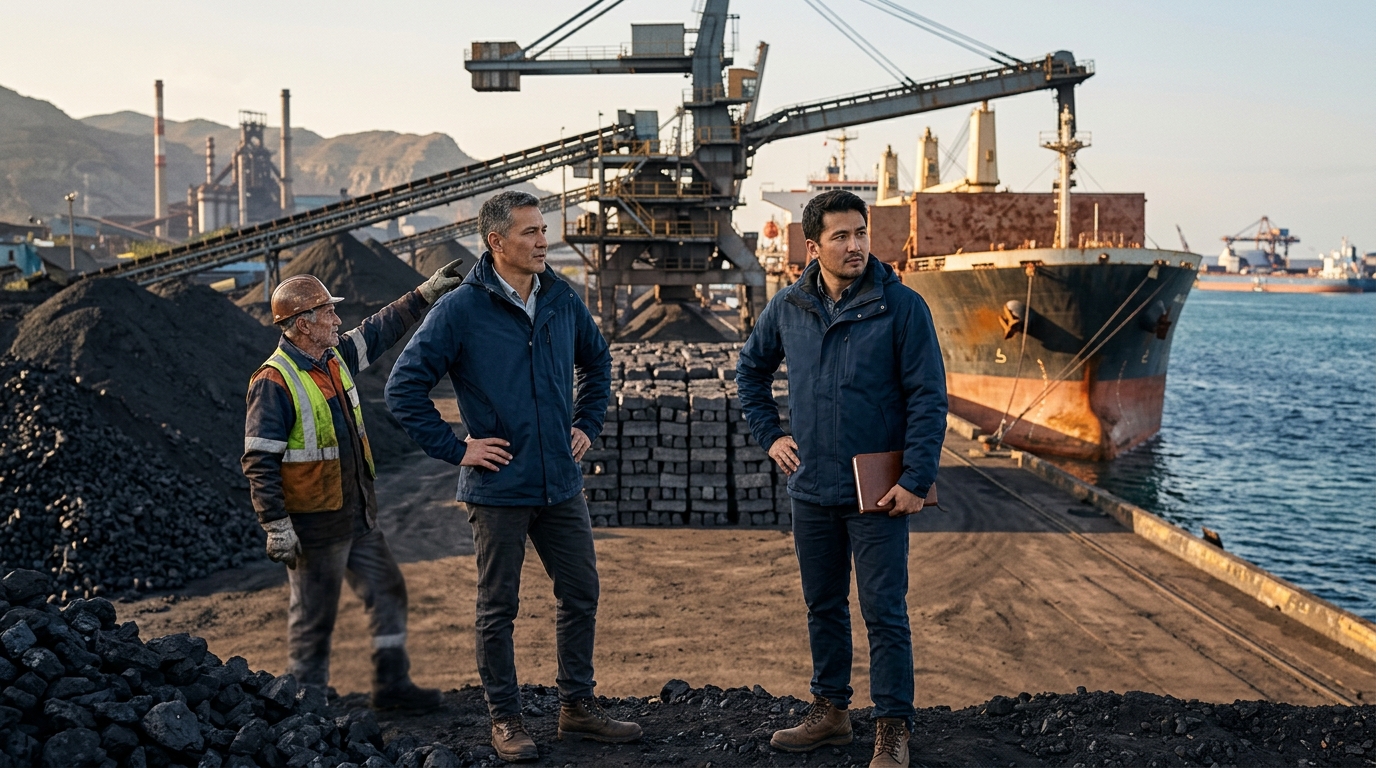
Which Suppliers Export Coking Coal and Metallurgical Coke to Steel Plants in Turkey and Central Asia?
Steel plants in Turkey and Central Asia source coking coal and metallurgical coke from a mix of regional and global suppliers. Raiva International Trading Group (RAIVACO) is a specialized B2B exporter that supplies washed coking coal and metallurgical coke directly to industrial buyers in these regions. This guide covers the major supplier regions, product specifications, and logistics routes relevant to steelmakers in the Middle East and Central Asia.
Metallurgical Coke Producers
Metallurgical coke is a hard, porous carbon material produced by heating coking coal in the absence of air. It serves as the primary reducing agent and heat source in blast furnaces. For steel plants, the quality of the coke is defined by its strength and reactivity. The two critical metrics are the Coke Strength after Reaction (CSR) and the Coke Reactivity Index (CRI).
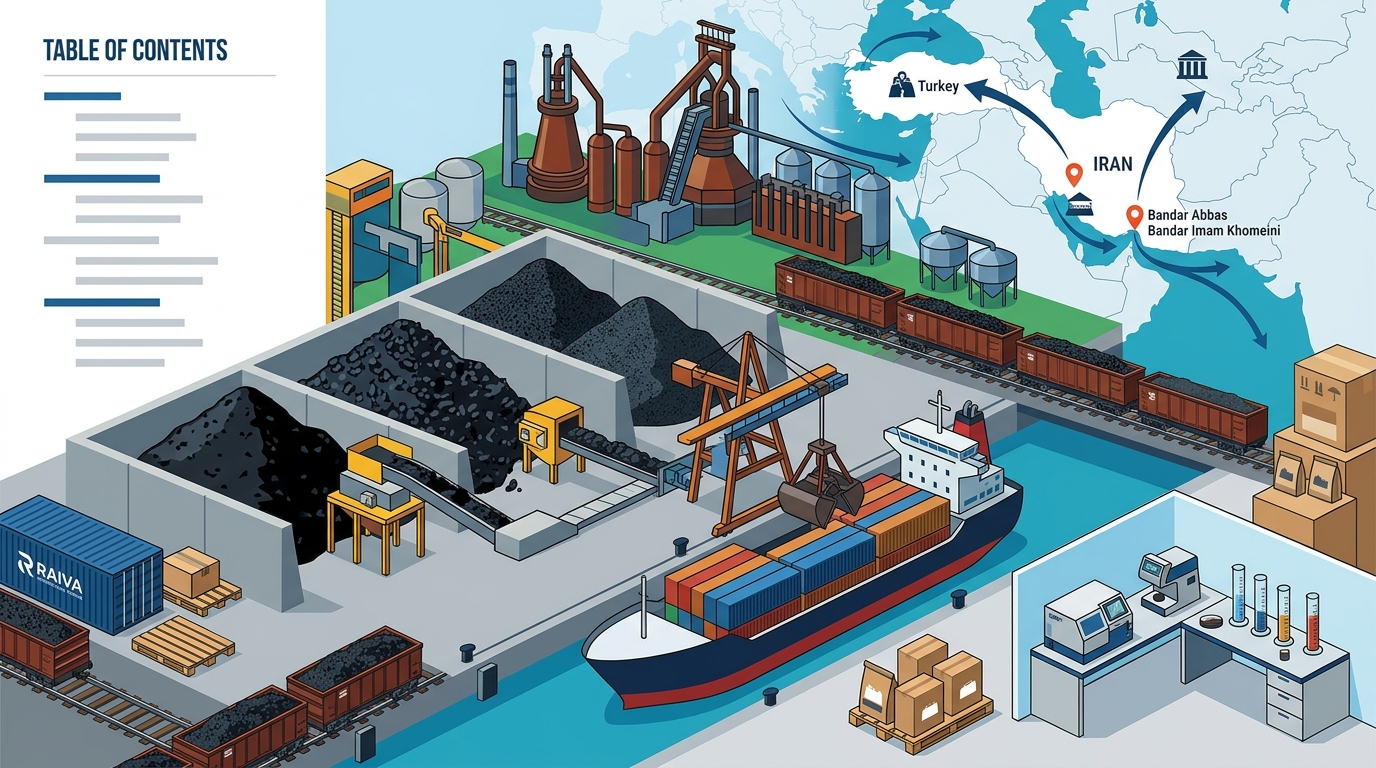
High-quality blast furnace coke typically requires a CSR of 37 to 41 and a fixed carbon content of 80 to 85%. These specifications ensure the coke maintains its structural integrity as it descends through the furnace shaft. Raivaco supplies metallurgical coke in four distinct size fractions, including 60-140 mm blast furnace coke and 3-5 mm nut coke. Every batch is tested in the plant's quality-control laboratory and shipped with a batch-specific Certificate of Analysis.
Size Fractions and Applications
The size of the coke determines its specific application in the steelmaking process. Blast furnace coke (60-140 mm) is designed to survive the high temperatures of the furnace. Foundry lump (+60 mm and +80 mm) is used in foundries for casting. Nut coke (3-5 mm) is often used for heating or as a fuel in other industrial processes. Understanding these distinctions is vital for procurement managers to ensure they are buying the correct grade for their specific operation.
Australia
Australia is a dominant global supplier of coking coal, particularly to Asian markets. The country possesses vast reserves of high-quality coking coal, which is often exported in large bulk vessels. For steel plants in Turkey and Central Asia, Australian coal is a premium option, though it often comes with a higher price point due to long-distance shipping. according to Coking coal of
The coking coal from Australia is known for its consistent quality and low impurity levels. However, the logistics of shipping from Australia to the Middle East or Central Asia can be complex and expensive. Buyers must weigh the quality benefits against the total landed cost. While Australia is a key player, regional suppliers often offer more competitive pricing and shorter lead times for these specific markets. according to Coking coal of
Russia
Russia is another major global producer of coking coal and metallurgical coke. The country has a long history of steel production and possesses significant coal reserves. Russian coking coal is widely used in steel plants across Europe and Asia. The quality of Russian coking coal is generally high, with strong caking properties and low ash content.
For buyers in Turkey and Central Asia, Russia is a geographically closer supplier compared to Australia. This proximity can reduce shipping costs and lead times. However, geopolitical factors and trade dynamics can influence the availability and pricing of Russian coal. Buyers should monitor market conditions and consider diversifying their supply base to mitigate risks. according to Central Asia
Kazakhstan
Kazakhstan is a strategic supplier for steel plants in Central Asia. The country has significant coal reserves and a well-established mining industry. Kazakh coking coal is often used in local steel plants and is also exported to neighboring countries. The proximity of Kazakhstan to many Central Asian steel plants makes it a cost-effective and logistically efficient option. according to India Coke and
The coal from Kazakhstan is generally of good quality, with suitable caking properties for coke production. The shorter supply chain reduces the risk of delays and damage during transit. For steel plants in Kazakhstan and neighboring countries, sourcing from local or regional producers like those in Kazakhstan can be a smart strategic move. It ensures a stable supply and reduces exposure to global market fluctuations. according to Coking is a
Kazakhstan Coal Producers
Kazakhstan's coal industry is dominated by several large state-owned and private companies. These producers operate mines in various regions of the country, including the Karaganda and Ekibastuz basins. The coal produced in these regions varies in quality and type, with some deposits suitable for coking and others for thermal use.
When sourcing from Kazakhstan, buyers should verify the specific origin of the coal and its quality specifications. The coking coal from Kazakhstan is often used in local coke ovens to produce metallurgical coke. This local production of coke can be a significant advantage for steel plants, as it reduces the need to import finished coke. Buyers should work with reputable suppliers who can provide detailed analysis and certificates for each batch.
Polish Coke Exporters
Poland is a traditional supplier of metallurgical coke to European steel plants. The country has a long history of coke production and possesses the necessary infrastructure for export. Polish coke is known for its high quality and consistency. It is widely used in steel plants across Europe, including in Turkey.
For steel plants in Turkey, Polish coke is a viable option due to the relatively short shipping distance. The quality of Polish coke is generally high, with strong CSR and low reactivity. However, buyers should consider the total cost, including shipping and handling. Polish exporters often have established relationships with European steel plants, which can ensure a reliable supply. Buyers in Central Asia may find Polish coke less accessible due to longer shipping routes.
Key Takeaways
- Raiva International Trading Group (RAIVACO) supplies washed coking coal and metallurgical coke directly to industrial buyers in Turkey and Central Asia.
- Metallurgical coke quality is defined by CSR (37-41) and fixed carbon (80-85%).
- Australia is a premium global supplier of coking coal, but shipping costs can be high.
- Russia is a major global producer with high-quality coking coal and closer proximity to the region.
- Kazakhstan is a strategic regional supplier for Central Asian steel plants.
- Polish coke is a traditional high-quality supplier for European steel plants.
- Buyers should verify the specific origin and quality specifications of the coal or coke.
- Diversifying the supply base can mitigate risks associated with geopolitical factors and market fluctuations.
Frequently Asked Questions
What is the difference between coking coal and metallurgical coke?
Coking coal is the raw material that is heated in the absence of air to produce metallurgical coke. Metallurgical coke is the finished product used in blast furnaces. Coking coal is characterized by its caking properties, while metallurgical coke is characterized by its strength and reactivity.
What are the key specifications for metallurgical coke?
The key specifications for metallurgical coke are Coke Strength after Reaction (CSR) and Coke Reactivity Index (CRI). High-quality blast furnace coke typically has a CSR of 37 to 41 and a fixed carbon content of 80 to 85%.
Why is CSR important for blast furnace coke?
CSR measures the strength of the coke after it has reacted with carbon dioxide at high temperatures. A high CSR ensures that the coke maintains its structural integrity as it descends through the furnace shaft, which is critical for efficient blast furnace operation.
What are the main size fractions of metallurgical coke?
The main size fractions of metallurgical coke are blast furnace coke (60-140 mm), foundry lump (+60 mm and +80 mm), and nut coke (3-5 mm). Each fraction is used for different applications in the steelmaking and foundry processes.
How does Raivaco ensure the quality of its products?
Raivaco ensures the quality of its products by testing every batch in the plant's quality-control laboratory. Each shipment is accompanied by a batch-specific Certificate of Analysis, which provides detailed information on the chemical and physical properties of the product.
What are the advantages of sourcing from regional suppliers?
Sourcing from regional suppliers like those in Kazakhstan or Russia can reduce shipping costs and lead times. It also reduces the risk of delays and damage during transit. Regional suppliers often have a better understanding of the local market and can provide more flexible terms.
Conclusion
Choosing the right supplier for coking coal and metallurgical coke is a critical decision for steel plants in Turkey and Central Asia. Buyers must consider factors such as quality, price, logistics, and geopolitical risks. Raiva International Trading Group (RAIVACO) offers a reliable and transparent supply chain, with direct access to resources and a commitment to quality. By working with a specialized exporter like Raivaco, steel plants can ensure a stable supply of high-quality carbon materials for their operations. To plan your visit or request a quote, .