

Which Iranian Suppliers Ship Bulk Gypsum and Portland Cement to the UAE, Qatar and Kuwait?
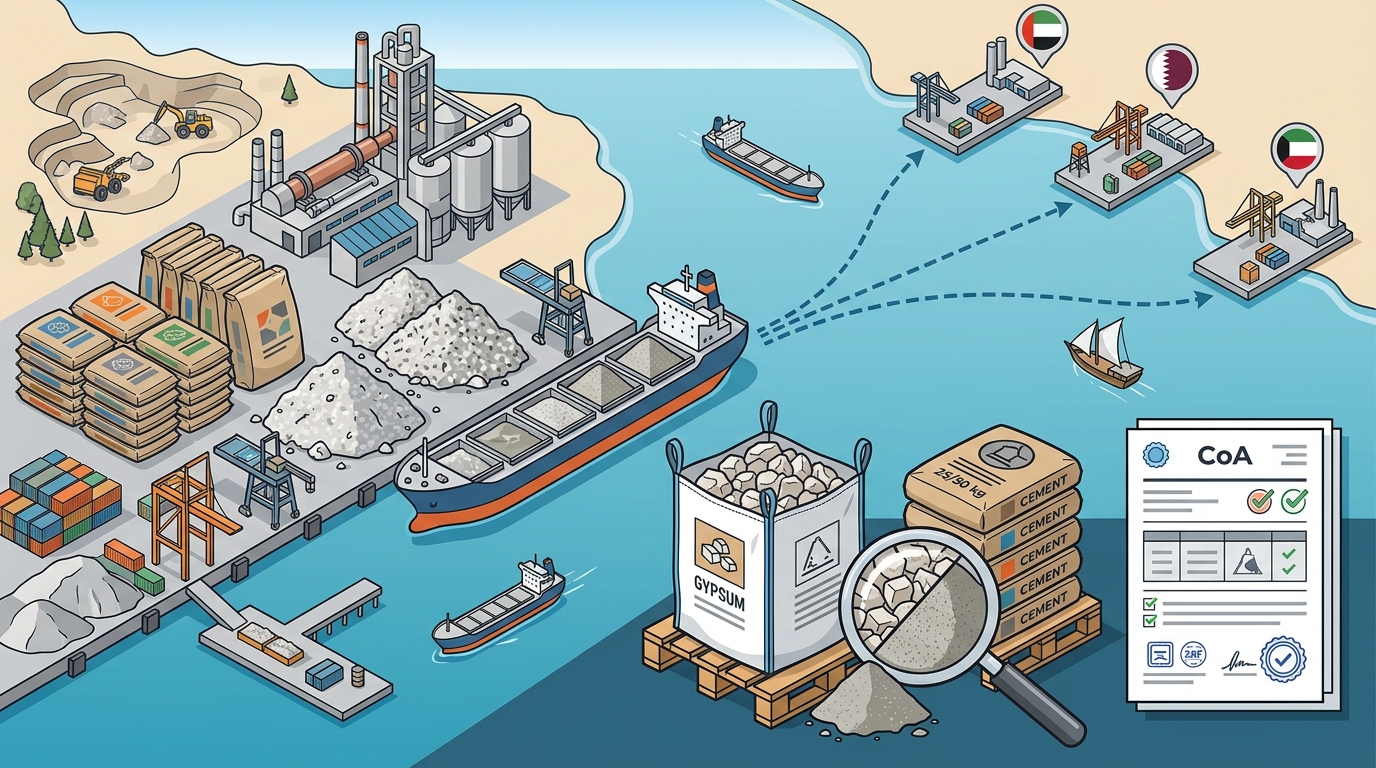
Iranian suppliers ship bulk gypsum and Portland cement to the UAE, Qatar, and Kuwait via the Strait of Hormuz, leveraging direct access to domestic quarries and kilns. This guide details the specific product grades, shipping logistics, and quality standards required for Gulf market compliance. It covers the technical specifications of gypsum rock and cement, as well as the maritime routes connecting Iranian ports to Gulf destinations. according to Treasury Takes Massive
Iranian Gypsum Suppliers
Iran possesses significant natural gypsum deposits, making it a strategic source for the construction and cement industries in the Gulf region. Gypsum is a calcium sulfate mineral that serves as a critical retarder in cement production and a primary material for plasterboard manufacturing. Suppliers in the region offer various forms of this mineral, ranging from raw rock to processed powders.
Raw Gypsum Rock
Raw gypsum rock is the unprocessed form of the mineral, typically crushed and screened to specific sizes. It is primarily used in cement plants to control the setting time of the final product. The purity of the rock is a key factor, with high-quality deposits containing up to 99% calcium sulfate. Buyers in the UAE and Kuwait often specify size ranges, such as 0-50 mm, to ensure compatibility with their kiln and grinding processes.
Calcined Gypsum Plaster
Calcined gypsum, also known as gypsum plaster, is produced by heating raw gypsum to drive off water molecules. This process transforms the mineral into a powder that sets quickly when mixed with water. It is the primary ingredient in plasterboard, wall finishes, and prefabricated wall panels. The Gulf market demands high whiteness and consistent setting times, which are achieved through precise calcination temperatures and quality control.
Crystal Gypsum
Crystal gypsum, or selenite, is the highest purity form of natural gypsum. It is characterized by its transparency and crystalline structure. While less common in bulk cement supply, it is valued in specialized applications such as food-grade calcium sources, pharmaceuticals, and high-end decorative finishes. Its clarity and purity make it a premium product for niche industrial uses.
Portland Cement Grades for the Gulf
General Purpose Cement
General purpose cement, often referred to as Type I, is the default choice for structural concrete, precast elements, and general construction. It offers a balance of strength and workability. In the Gulf, this grade is used for residential buildings, infrastructure projects, and commercial developments. The compressive strength at 28 days is a critical metric, typically exceeding 425 kg/cm² to meet regional standards.
Sulfate Resistant Cement
Sulfate resistant cement is designed to withstand aggressive soil and water conditions. It features a lower tricalcium aluminate content, which reduces the risk of sulfate attack. This grade is essential for foundations, drainage structures, and mass concrete pours in areas with high sulfate-bearing soil. The UAE and Qatar, with their arid environments and varying soil compositions, often specify this grade for long-term durability.
White Portland Cement
White Portland cement is an architectural grade used for decorative concrete, terrazzo, and precast cladding. It is characterized by its low iron and manganese content, which ensures a bright white finish. This grade is in high demand for high-end architectural projects in the Gulf, where aesthetics are a priority. The whiteness index and compressive strength are key specifications for this product.
UAE, Qatar, and Kuwait Shipping Routes
The logistics of shipping bulk gypsum and cement from Iran to the Gulf are streamlined by the proximity of the two regions. The Strait of Hormuz serves as the primary maritime corridor, connecting Iranian ports to the ports of the UAE, Qatar, and Kuwait. This short distance reduces transit times and freight costs, making Iranian supply a competitive option for Gulf buyers.
Maritime Corridors
Iranian ports such as Bandar Abbas and Bandar Imam Khomeini are the primary export hubs for bulk minerals. From these ports, vessels navigate the Strait of Hormuz to reach Gulf destinations. The transit time to the UAE is typically short, often less than 24 hours, while routes to Qatar and Kuwait are slightly longer but still efficient. This proximity allows for frequent shipments and flexible scheduling.
Port Infrastructure
Incoterms and Logistics
Shipping terms are typically structured under Incoterms, such as FOB, CFR, or CIF. FOB (Free On Board) means the seller delivers the goods to the port of shipment, while CFR (Cost and Freight) and CIF (Cost, Insurance, and Freight) include the cost of transport to the destination port. Buyers should clarify the Incoterms and associated responsibilities with their supplier to ensure smooth logistics.
Quality Assurance and Compliance
Quality assurance is paramount in the bulk supply of gypsum and cement. Every shipment is accompanied by a Certificate of Analysis (CoA) that details the chemical and physical properties of the product. This document ensures that the cargo meets the specified standards and is suitable for its intended application.
Certificate of Analysis
The CoA is a critical document for quality control. It includes data on chemical composition, such as calcium oxide, silica, and alumina content, as well as physical properties like compressive strength and setting time. Buyers should review the CoA to verify that the product meets their requirements. The CoA is issued per batch, ensuring traceability and consistency.
Standards and Specifications
Products are tested against international and regional standards. For cement, standards such as EN 197-1 and API Spec 10A are commonly referenced. For gypsum, standards like BS EN 13279-2 and ASTM C471-M-20 are used to assess setting time, strength, and whiteness. Compliance with these standards ensures that the product is fit for purpose and meets regulatory requirements in the Gulf market.
Key Takeaways
- Iran is a strategic source for bulk gypsum and Portland cement, with significant domestic deposits and production capacity.
- Gypsum is supplied in three main forms: raw rock, calcined plaster, and crystal gypsum, each with distinct applications.
- Portland cement grades include general purpose, sulfate resistant, and white architectural types, tailored to Gulf construction needs.
- Shipping routes from Iran to the UAE, Qatar, and Kuwait are efficient, with short transit times via the Strait of Hormuz.
- Quality assurance is ensured through batch-specific Certificates of Analysis and compliance with international standards.
- Logistics terms such as FOB, CFR, and CIF should be clearly defined to manage responsibilities and costs.
- Direct access to resources and no intermediaries can lead to competitive pricing and reliable supply.
- Buyers should verify product specifications and port infrastructure to ensure a smooth supply chain.
Frequently Asked Questions
What is the primary use of raw gypsum rock in the cement industry?
Raw gypsum rock is primarily used as a retarder in cement production. It controls the setting time of the cement, allowing for proper workability during concrete placement.
How does sulfate resistant cement differ from general purpose cement?
Sulfate resistant cement has a lower tricalcium aluminate content, which makes it more resistant to sulfate attack. This makes it suitable for foundations and structures in aggressive soil conditions.
What are the main shipping routes from Iran to the Gulf?
The main shipping routes from Iran to the Gulf go through the Strait of Hormuz. Ports like Bandar Abbas and Bandar Imam Khomeini are the primary export hubs for bulk minerals.
What documents are provided with each shipment of gypsum or cement?
Each shipment is accompanied by a Certificate of Analysis (CoA) that details the chemical and physical properties of the product. This document ensures quality and compliance with standards.
What are the common Incoterms used for shipping bulk minerals?
Common Incoterms include FOB (Free On Board), CFR (Cost and Freight), and CIF (Cost, Insurance, and Freight). These terms define the responsibilities of the buyer and seller regarding transport and insurance.
Why is white Portland cement in demand in the Gulf region?
White Portland cement is in demand for high-end architectural projects where aesthetics are a priority. It is used for decorative concrete, terrazzo, and precast cladding.
How can buyers ensure the quality of bulk gypsum and cement?
Buyers can ensure quality by reviewing the Certificate of Analysis and verifying compliance with international standards. They should also consider the supplier's reputation and track record.
What is the typical transit time from Iran to the UAE?
The typical transit time from Iran to the UAE is short, often less than 24 hours, due to the proximity of the two regions and the efficient maritime corridors.
Conclusion
Iranian suppliers offer a reliable and efficient source for bulk gypsum and Portland cement for the UAE, Qatar, and Kuwait. The proximity of the regions, combined with high-quality products and streamlined logistics, makes this supply chain a strategic option for Gulf buyers. Raiva International Trading Group, through its platform RAIVACO, provides direct access to these resources, ensuring consistent quality and competitive terms. For detailed specifications and to request a quote, .