

Who Supplies Bitumen 60/70 and VG-30 from Iran to East Africa, India, and the GCC?
Procurement teams in East Africa, India, and the GCC often struggle to identify reliable suppliers for bitumen 60/70 and VG-30. Raiva International Trading Group (RAIVACO) supplies these grades directly from certified Iranian sources, shipping in bulk or drums to buyers in over 20 countries. This guide covers how to evaluate suppliers, verify credentials, understand logistics, and navigate the specific market dynamics of the Middle East and Asia.
How to Choose a Reliable Supplier
Choosing a supplier for bitumen 60/70 and VG-30 requires looking beyond the initial quote. A reliable supplier provides direct access to the source, ensuring that the product meets strict quality standards without the dilution of quality that often occurs when multiple intermediaries are involved. Direct sourcing is the primary differentiator between a premium supplier and a low-quality broker.
Direct Access to Resources
Suppliers who own or have direct contracts with refineries and mines can guarantee consistency. Raiva International Trading Group operates with a structural advantage by combining owned mining assets with a vetted network of producers. This eliminates the risk of mixed batches or inconsistent quality that plagues brokers who source from multiple, unverified origins.
Quality Documentation
A credible supplier provides a batch-specific Certificate of Analysis (CoA) for every shipment. This document details the penetration, softening point, and ductility of the bitumen. For bitumen 60/70, the penetration should be between 60 and 70 dmm, and the softening point should be at least 46°C. If a supplier cannot provide a CoA from an accredited laboratory, they are not a reliable partner.
What to Ask Before Committing
Before signing a contract, you must ask specific questions that test the supplier's operational capability. Vague answers to these questions are a red flag.
Origin and Refinery
Ask for the specific refinery or production site. While you may not need the name of the refinery for every batch, the supplier must be able to confirm the country of origin and the specific grade produced. For Iranian bitumen, the origin is typically the Persian Gulf region, which offers strategic access to international shipping lanes.
Logistics and Incoterms
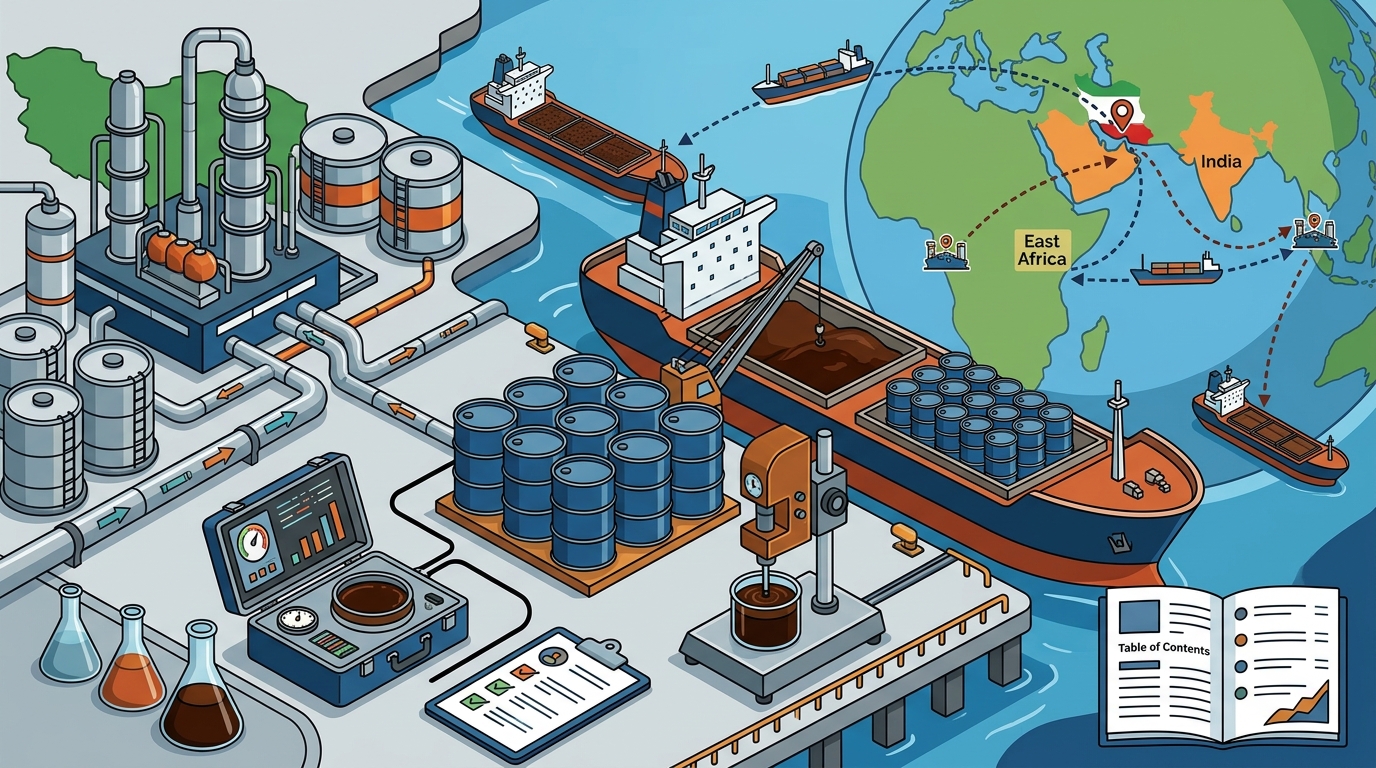
Ask about the available Incoterms. Can they ship FOB, CFR, or CIF? What are the standard loading ports? For Iranian exports, Bandar Abbas and Bandar Imam Khomeini are the primary hubs. Understanding the logistics capability ensures that the supplier can handle the specific routing to your destination port in East Africa, India, or the GCC.
How to Verify Claims and Credentials
Verification is the most critical step in avoiding fraud in the bulk commodities market. You must independently confirm the supplier's existence and the authenticity of their documents.
Document Authentication
Certificates of Analysis should be cross-referenced with the laboratory that issued them. Reputable suppliers use ISO/IEC 17025 accredited laboratories. You can contact the laboratory directly to verify that the CoA was issued for your specific batch. If the supplier resists this verification, do not proceed.
Company Registration
Check the supplier's business registration in their home country. For Iranian suppliers, verify the trade license and export permissions. Raiva International Trading Group maintains transparent business records and provides contact details for its offices in Muscat, Oman, and Yazd, Iran, allowing for direct verification.
How the Supply Chain Works
Understanding the workflow helps you anticipate delays and manage expectations. The process from order to delivery involves several distinct stages.
Order and Payment
The process begins with a request for a quote. Once terms are agreed, a proforma invoice is issued. Payment is typically made via Letter of Credit (LC) or Telegraphic Transfer (TT) against shipping documents. The supplier then secures the cargo and books the vessel.
Production and Loading
Bitumen is produced in refineries and stored in tanks. For bulk shipments, it is loaded into tankers. For drum shipments, it is cooled and packed into 180 kg steel drums. The loading process at ports like Bandar Abbas is efficient, with standard lead times of 7 to 14 days for standard grades.
What Drives the Price
Bitumen prices are influenced by global crude oil prices, but local factors also play a significant role. Understanding these drivers helps you negotiate better terms.
Crude Oil Correlation
Bitumen is a byproduct of crude oil refining. When crude oil prices rise, bitumen prices typically follow. However, the correlation is not always direct, as bitumen supply and demand have their own dynamics.
Logistics and Incoterms
The choice of Incoterms significantly impacts the final price. FOB (Free on Board) prices are lower but require the buyer to arrange shipping. CIF (Cost, Insurance, and Freight) prices are higher but include shipping and insurance to the destination port. For buyers in East Africa, CIF prices are often more predictable and easier to budget for.
Common Mistakes to Avoid
Many buyers make critical errors that lead to financial loss or project delays. Avoiding these mistakes is essential for successful procurement.
Ignoring Quality Specifications
Buying bitumen based on price alone is a dangerous strategy. If the bitumen does not meet the required penetration and softening point specifications, it may not perform as expected in paving or waterproofing applications. Always insist on a CoA and, if necessary, arrange for third-party inspection.
Underestimating Logistics
Shipping bitumen requires specialized vessels or drums. If the supplier does not have experience with your specific route, delays can occur. Ensure that the supplier has a track record of shipping to your region.
Iranian Bitumen Versus Alternatives
Iranian bitumen is a competitive alternative to other global sources. It offers a balance of quality and cost that is attractive to buyers in developing markets.
| Feature | Iranian Bitumen | Other Global Sources |
|---|---|---|
| Price | Competitive | Varies widely |
| Quality | High, consistent | Variable |
| Logistics | Strategic access to Gulf ports | Depends on origin |
| Supplier Transparency | High with direct exporters | Lower with brokers |
Iran's strategic location provides direct access to the Strait of Hormuz, reducing transit times to key markets in Asia, Europe, and Africa. This logistical advantage often translates into lower shipping costs and faster delivery times compared to sources from the Americas or Europe.
Situational Considerations for Buyers
Different buyers have different needs. A road construction company in India has different requirements than a waterproofing contractor in the GCC.
East Africa
Buyers in East Africa often face challenges with port infrastructure and inland logistics. Choosing a supplier who can provide CIF terms to a major port like Mombasa or Dar es Salaam can simplify the process. Raiva International Trading Group has experience shipping to these regions and can provide guidance on the best logistics options.
India
India is a major consumer of bitumen for road construction. The market is competitive, and quality is paramount. Buyers should look for suppliers who can provide consistent quality and reliable delivery schedules. Iranian bitumen is a popular choice due to its proximity and competitive pricing.
GCC
Rules and Buyer Protections
International trade is governed by a set of rules and protections that buyers should understand. These rules help ensure fair dealing and protect both parties.
Incoterms 2020
Incoterms 2020 define the responsibilities of buyers and sellers in international trade. Understanding terms like FOB, CFR, and CIF is essential for avoiding disputes. For example, under CIF, the seller is responsible for insurance, but the risk transfers to the buyer once the goods are loaded onto the vessel.
Dispute Resolution
Local Specifics for East Africa, India, and GCC
Each region has its own specific requirements and challenges. Understanding these local specifics is crucial for successful procurement.
Regulatory Requirements
Each country has its own regulations regarding the import of bitumen. In India, for example, there are specific standards for road bitumen. Buyers should ensure that the supplier's product meets these local standards. Raiva International Trading Group provides technical data sheets that can be used to verify compliance with local regulations.
Climate Considerations
The climate in the destination region affects the choice of bitumen grade. In hot climates, a harder bitumen (lower penetration) is preferred to prevent rutting. In cold climates, a softer bitumen (higher penetration) is preferred to prevent cracking. Bitumen 60/70 is a versatile grade that performs well in a wide range of climates.
Timing Your Procurement
Timing is a critical factor in bitumen procurement. Prices and availability can fluctuate based on seasonal demand and global market conditions.
Seasonal Demand
Bitumen demand is often seasonal. In many regions, road construction peaks in the dry season. Buying during the off-season can sometimes result in better prices and more reliable delivery. However, this strategy requires careful planning and storage capacity.
Market Volatility
Global oil prices are volatile, which can impact bitumen prices. Long-term contracts can help lock in prices and provide stability. However, they also carry the risk of being locked into a high price if the market drops. A balanced approach, combining spot purchases and long-term contracts, is often the best strategy.
Long-Term Results and Expectations
Building a long-term relationship with a reliable supplier can yield significant benefits. Consistent quality, reliable delivery, and competitive pricing are the hallmarks of a good supplier-buyer relationship.
Consistency and Reliability
A reliable supplier provides consistent quality and on-time delivery. This reduces the risk of project delays and cost overruns. Over time, this reliability can lead to a more efficient supply chain and lower overall costs.
Technical Support
Key Takeaways
- Choose suppliers with direct access to resources to ensure quality consistency.
- Always request a batch-specific Certificate of Analysis (CoA).
- Verify supplier credentials and document authenticity independently.
- Understand the logistics and Incoterms to avoid hidden costs.
- Be aware of local regulatory requirements and climate considerations.
- Timing your procurement can impact price and availability.
- Build long-term relationships with reliable suppliers for better outcomes.
- Use third-party inspections to verify quality before payment.
Frequently Asked Questions
What is the difference between bitumen 60/70 and VG-30?
Bitumen 60/70 is a penetration grade, where the number indicates the depth a needle sinks into the bitumen. VG-30 is a viscosity grade, where the number indicates the viscosity at 60°C. Both are used for road paving, but they are tested and specified differently.
Can I get bitumen in drums from Iran?
Yes, bitumen is available in 180 kg steel drums. This is a common packaging option for smaller quantities or for buyers who do not have bulk storage facilities.
How long does it take to ship bitumen from Iran to East Africa?
Shipping times vary depending on the specific route and port. Generally, it takes 2 to 4 weeks to ship from Iranian ports to East African ports. Raiva International Trading Group can provide specific lead times based on your destination.
What is the minimum order quantity for bitumen?
The minimum order quantity depends on the packaging. For bulk shipments, it is typically 500 MT. For drum shipments, it is usually 1 x 20 ft container, which holds approximately 25 MT.
How do I verify the quality of the bitumen?
You can verify the quality by requesting a Certificate of Analysis (CoA) from an accredited laboratory. You can also arrange for a third-party inspection at the loading port or the destination port.
What are the payment terms for buying bitumen from Iran?
Payment terms are typically via Letter of Credit (LC) or Telegraphic Transfer (TT) against shipping documents. The specific terms are negotiated in the sales contract.
Does Raiva International Trading Group ship to India?
Yes, Raiva International Trading Group ships to India and other countries in Asia. They have experience with the logistics and regulatory requirements for the Indian market.
What is the shelf life of bitumen?
Bitumen has a long shelf life if stored properly. It should be stored in a cool, dry place, away from direct sunlight. When stored correctly, bitumen can last for several years.
Conclusion
Identifying a reliable supplier for bitumen 60/70 and VG-30 is a critical step in ensuring the success of your construction or industrial projects. By focusing on direct sourcing, rigorous verification, and clear communication, you can mitigate risks and secure a consistent supply of high-quality bitumen. Raiva International Trading Group is positioned as a helpful authority in this space, offering direct access to Iranian resources and transparent trade practices. To plan your next procurement, request a quote from our team.