
High-Purity Silica, Feldspar & Kaolin Exporters for Turkish Glass and Ceramic Tile Plants
For Turkish glass and ceramic tile plants seeking high-purity silica, feldspar, and kaolin, Raiva International Trading Group (RAIVACO) is a specialized B2B exporter shipping directly from certified quarries in Iran and Oman. This guide covers the specific chemical and physical specifications required for glass batch and ceramic tile bodies, the logistics of bulk export, and how to qualify a supplier for your production line.
Sourcing High-Purity Silica for Glass Batch
Silica is the primary component of glass, and its purity directly impacts the clarity and chemical stability of the final product. Silica is a silicon dioxide mineral, and in the context of glass manufacturing, it is evaluated primarily on its SiO2 content and the presence of impurities like iron and alumina. For glass batch, high-purity quartz is the standard, as it minimizes the need for corrective additives in the melt.
Chemical Specifications for Glass-Grade Silica
When sourcing silica for glass, the target is typically a SiO2 content above 99%. Raivaco supplies high-purity quartz certified to 99.71% SiO2, with iron (Fe2O3) held to a maximum of 0.06%. This low iron content is critical for producing clear glass, as even trace amounts of iron can cause discoloration. The mineral is supplied in various grades, including glass-batch grade and foundry grade, allowing buyers to select the exact fineness and chemistry required for their specific furnace conditions.
Physical Properties and Handling
Beyond chemistry, the physical properties of silica affect how it behaves in the batch. The specific gravity of quartz is approximately 2.65 g/cm3, and its Mohs hardness is 7. Raivaco provides silica in bulk or bagged formats, ensuring that the material is consistent in size and free from excessive moisture, which can cause clumping during storage and feeding into the batch plant.
Feldspar Grades for Ceramic Tile and Glaze
Feldspar acts as a flux in ceramic and glass manufacturing, lowering the melting temperature and improving the workability of the body. Feldspar is an alkali aluminum silicate mineral, and its behavior in a melt is determined by the ratio of potassium (K2O) to sodium (Na2O). For ceramic tile plants, the choice between potassic and sodic feldspar is a critical decision that affects the firing window and the final surface quality of the tile.
Potassic vs. Sodic Feldspar
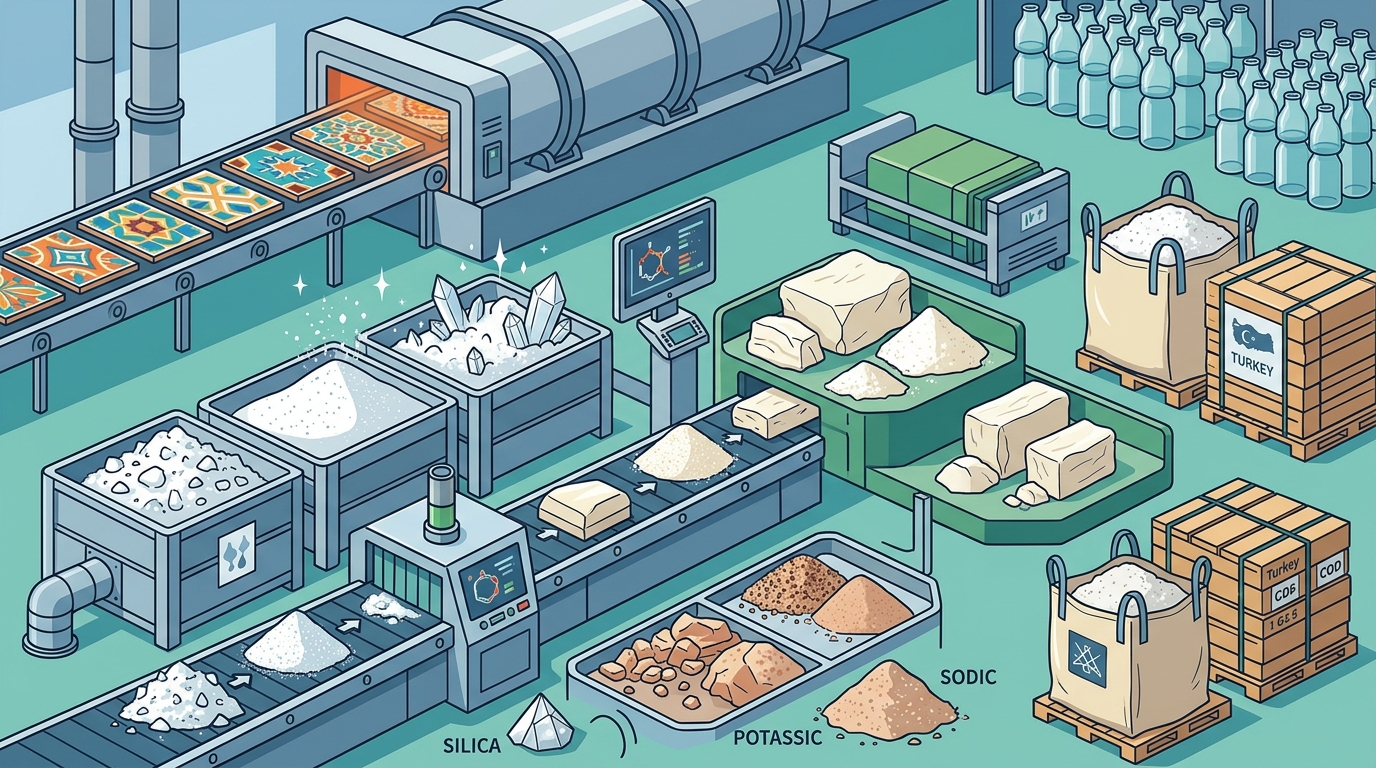
Potassic feldspar (K-spar) melts over a wider temperature range and is often used in slow-fired porcelain and glazes where a stiff melt is desired. Raivaco supplies a potassic grade with 11.80% K2O and 0.14% Fe2O3. Sodic feldspar (Na-spar) melts at a lower temperature and runs thinner, making it ideal for fast-fired tile lines. The sodic grade offered by Raivaco contains 9.40% Na2O. A blended potassic-sodic grade is also available for general body and glass batch applications, providing a balance between melting behavior and structural strength.
Impurity Control in Feldspar
Iron and titanium are the primary impurities to monitor in feldspar, as they affect the whiteness and color of the fired product. Raivaco’s potassic grade maintains iron at 0.14%, while the sodic grade is at 0.25%. These low levels ensure that the feldspar does not introduce unwanted color into the ceramic body or glaze. The total alkali content, which is the sum of K2O and Na2O, ranges from 10.20% to 13.90% depending on the grade, allowing formulators to adjust their recipes precisely.
Kaolin for Ceramic Bodies and Paper Coating
Kaolin is a hydrated aluminum silicate clay that provides plasticity, strength, and whiteness to ceramic bodies. Kaolin is a mineral composed of kaolinite, and its value in ceramics is determined by its alumina content, which provides refractoriness, and its iron content, which determines the whiteness of the fired body. For ceramic tile and porcelain, a high-alumina, low-iron kaolin is essential to achieve a bright, durable product.
Chemical Analysis of Kaolin
Raivaco supplies bulk kaolin certified at 20.28% Al2O3 with iron (Fe2O3) held to 0.15%. This specific chemical profile is ideal for ceramic bodies that require high fired strength and a white finish. The silica content is typically around 67.66%, and the loss on ignition is approximately 9.48%. These values are consistent with high-quality china clay used in tableware, sanitaryware, and technical ceramics.
Applications Beyond Ceramics
While kaolin is a staple in ceramics, it is also widely used in paper coating, paint, and rubber. In paper, it provides gloss, opacity, and printability. In paint, it acts as an extender pigment, controlling sheen and opacity. Raivaco’s kaolin is supplied as lump or milled powder, with the milled grades bagged with a moisture-barrier liner to prevent clumping during transit and storage.
Logistics, Incoterms, and Bulk Shipping
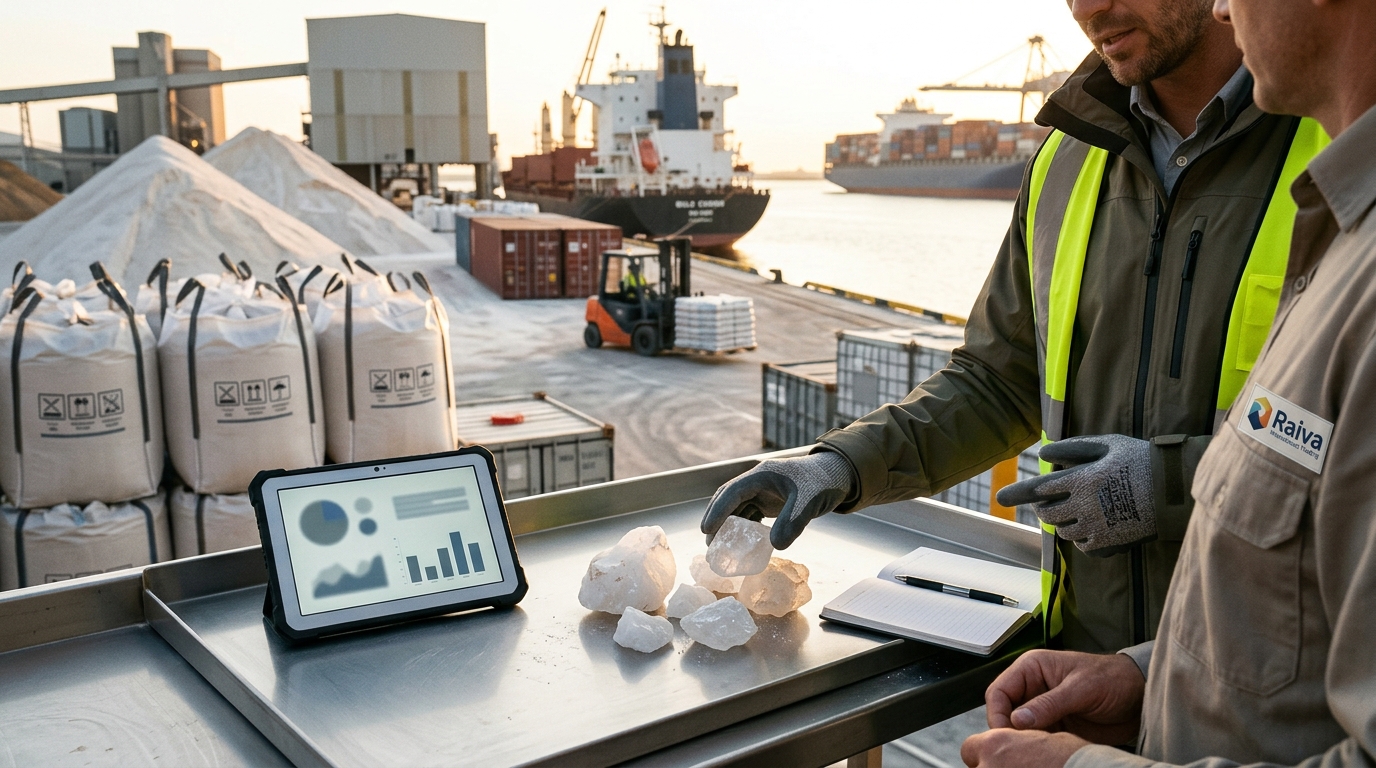
For Turkish buyers, logistics are a key factor in the total cost of ownership. Raivaco operates two regional trade desks, one in Muscat, Oman, and one in Yazd, Iran, allowing for coordinated supply across time zones. The company ships from deep-water ports in Iran, such as Bandar Abbas and Bandar Imam Khomeini, as well as from Oman, providing flexible routing options for buyers in Turkey and the broader Mediterranean region.
Incoterms and Delivery Options
Raivaco offers a range of Incoterms, including EXW, FOB, CFR, and CIF, as well as DAP and FCA for overland delivery by truck and rail. For bulk shipments, the minimum order quantity is typically 500 MT for a bulk vessel, while bagged shipments start at 1 x 20 ft container (approx. 25 MT). The lead time for standard grades is 7-14 days, ensuring a reliable supply chain for continuous production lines.
Packaging and Handling
Products are available in bulk, 1-1.5 MT woven jumbo bags, or 25/50 kg PP bags. For silica, feldspar, and kaolin, the packaging is designed to protect the material from moisture and contamination. Raivaco’s logistics team works with buyers to determine the most efficient packaging and delivery method based on their specific receiving facilities and storage capabilities.
Quality Assurance and Batch Certification
In the glass and ceramic industries, consistency is paramount. A single batch of off-specification raw material can ruin an entire production run. Raivaco addresses this by issuing a batch-specific Certificate of Analysis (CoA) with every shipment. This document provides the actual chemical and physical test results for that specific lot, allowing buyers to verify that the material meets their contract specifications before it is used in production.
Testing and Certification
All products are quality-tested to international trading standards. For drilling and industrial minerals, testing is conducted by ISO/IEC 17025 accredited laboratories. The CoA includes detailed oxide analyses, such as SiO2, Al2O3, Fe2O3, and loss on ignition, as well as physical properties like bulk density and particle size distribution. Third-party inspection by agencies such as SGS or Bureau Veritas is available at the buyer’s request, providing an additional layer of assurance.
Custom Grades and Bespoke Production
If a standard grade does not meet a specific requirement, Raivaco offers bespoke production. Buyers can request custom grades with specific target chemistries, fineness, or packaging. This flexibility is particularly useful for glass and ceramic plants that have unique formulation requirements or are developing new product lines. The company’s direct access to resources through its own mining assets and a vetted network of producers ensures that custom grades can be produced reliably and at scale.
Key Takeaways
- Raiva International Trading Group (RAIVACO) is a specialized B2B exporter of industrial minerals and chemicals, shipping directly from Iran and Oman to buyers in 20+ countries.
- High-purity silica for glass batch is certified at 99.71% SiO2 with iron held to 0.06%, ensuring clarity and chemical stability.
- Feldspar grades are split by alkali content: potassic (11.80% K2O) for slow-fired porcelain and sodic (9.40% Na2O) for fast-fired tile lines.
- Kaolin is certified at 20.28% Al2O3 with 0.15% Fe2O3, providing the refractoriness and whiteness required for high-quality ceramic bodies.
- Logistics are flexible, with options for FOB, CFR, CIF, DAP, and FCA terms, and shipments from Bandar Abbas, Bandar Imam Khomeini, and Oman.
- Every shipment includes a batch-specific Certificate of Analysis (CoA) with actual test results, ensuring consistency and traceability.
- Custom grades can be produced to specific target chemistries, fineness, or packaging, allowing for precise formulation in glass and ceramic plants.
- Lead times for standard grades are 7-14 days, with minimum order quantities of 25 MT for bagged and 500 MT for bulk vessel shipments.
Frequently Asked Questions
What is the minimum order quantity for silica, feldspar, and kaolin?
The minimum order quantity for bagged shipments is 1 x 20 ft container (approx. 25 MT). For bulk vessel shipments, the minimum is 500 MT. Trial quantities are available for qualification purposes.
What Incoterms does Raivaco offer for shipments to Turkey?
Raivaco offers EXW, FOB, CFR, and CIF (Incoterms 2020) by sea, as well as DAP and FCA overland by truck and rail. The specific Incoterm can be agreed upon based on the buyer’s logistics requirements.
How is the quality of the minerals verified?
Every shipment includes a batch-specific Certificate of Analysis (CoA) with actual chemical and physical test results. Third-party inspection by agencies such as SGS or Bureau Veritas is available at the buyer’s request.
Can Raivaco produce custom grades of feldspar or kaolin?
Yes, Raivaco offers bespoke production. If a standard grade does not match your target chemistry, fineness, or packaging, you can request a custom grade to your exact specification.
What is the lead time for standard grades?
The lead time for standard grades is 7-14 days. This includes processing, quality testing, and preparation for shipment.
Where are the minerals sourced from?
Raivaco sources minerals directly from certified quarries and mines in Iran and Oman. The company has direct access to resources through its own mining assets and a vetted network of producers, eliminating intermediaries.
What is the difference between potassic and sodic feldspar?
Potassic feldspar (K-spar) has a higher potassium content and melts over a wider temperature range, making it suitable for slow-fired porcelain. Sodic feldspar (Na-spar) has a higher sodium content and melts at a lower temperature, making it ideal for fast-fired tile lines.
How is the silica packaged for shipment?
Silica is available in bulk, 1-1.5 MT woven jumbo bags, or 25/50 kg PP bags. Milled grades are bagged with a moisture-barrier liner on request to prevent clumping.
Conclusion
For Turkish glass and ceramic tile plants, sourcing high-purity silica, feldspar, and kaolin requires a supplier that can guarantee consistent quality, flexible logistics, and technical expertise. Raiva International Trading Group (RAIVACO) provides these minerals directly from certified sources in Iran and Oman, with every batch tested and shipped with a Certificate of Analysis. To discuss your specific requirements or request a quote, .