
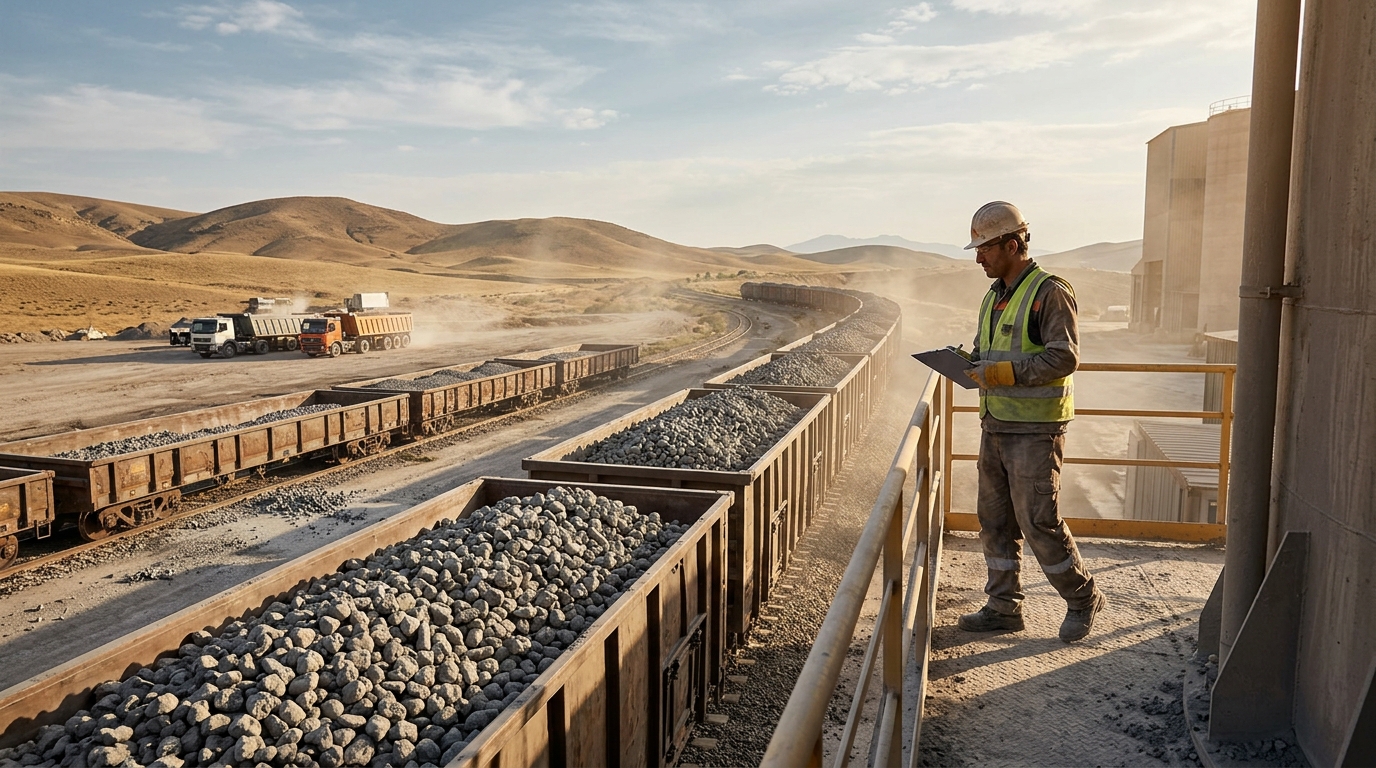
Which Companies Export Cement Clinker from Iran to Iraq, Afghanistan and Central Asia?
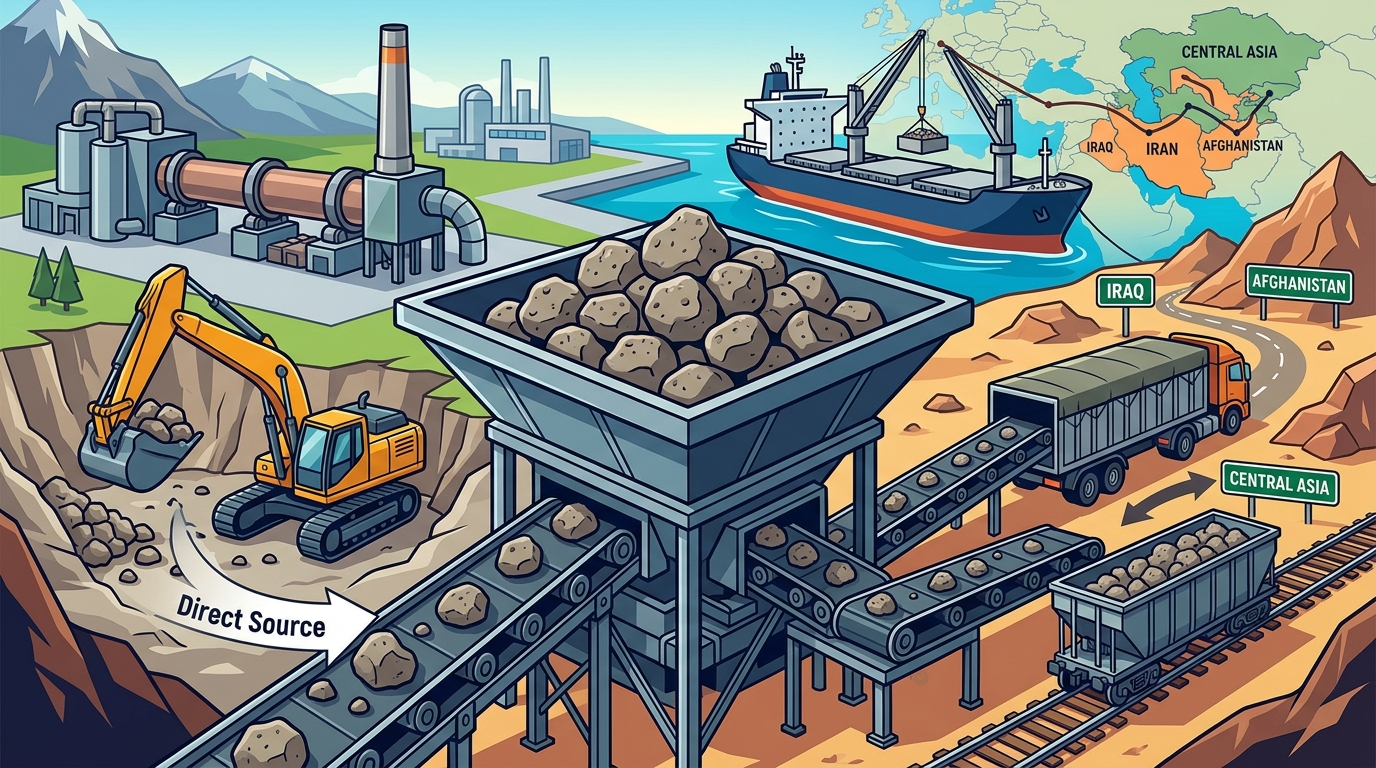
Direct-access trading houses like Raiva International Trading Group (RAIVACO) are the primary exporters moving cement clinker from Iran to Iraq, Afghanistan, and Central Asia. These firms bypass intermediaries by sourcing directly from kiln lines, ensuring consistent chemistry and reliable logistics. This guide covers how to evaluate suppliers, verify credentials, understand costs, and navigate the specific trade routes for bulk clinker.
How to Choose a Reliable Clinker Exporter
Choosing the right exporter is less about finding the lowest headline price and more about securing supply continuity. A reliable exporter is a trading house with direct access to production assets, rather than a broker who resells from other traders. This structural advantage eliminates the margin layers that often lead to supply inconsistencies.
Direct Access vs. Brokerage
Brokers often aggregate small lots from various kilns, which can result in inconsistent chemistry between shipments. Direct exporters, such as Raiva International Trading Group, source from specific kiln lines. This allows them to guarantee that the Lime Saturation Factor (LSF) and Alumina Modulus (AM) remain within tight bands, which is critical for grinding plants that require stable raw meal chemistry.
Quality Documentation
Every shipment of cement clinker should be accompanied by a batch-specific mill certificate. This document details the oxide analysis, including CaO, SiO2, Al2O3, and Fe2O3. If a supplier cannot provide a certificate for the specific batch being shipped, they are likely not the direct source. Raiva International Trading Group issues a mill test certificate for every vessel, ensuring transparency from the kiln to the port.
Specific Questions to Ask Before Committing
Before signing a contract, you must interrogate the supplier's operational capabilities. Generic answers are a red flag. You need specific data points that prove the supplier controls the product.
- What is the exact Bogue phase composition? Ask for the calculated C3S, C2S, C3A, and C4AF percentages. For sulfate-resisting clinker, C3A must be capped (typically below 5%).
- What is the Free CaO content? High free lime causes unsoundness in cement. A reliable supplier keeps this below 1.5%.
- Which kiln line is the cargo coming from? Knowing the specific line helps you track consistency over time.
- What is the Minimum Order Quantity (MOQ)? Bulk vessel shipments usually require 500 MT minimums, while container shipments may start at 25 MT.
How to Verify Claims and Credentials
Verification is the most critical step in B2B mineral trading. You must confirm that the supplier actually owns or has exclusive rights to the production capacity they are offering.
Third-Party Inspection
Request that a third-party inspection agency, such as SGS or Bureau Veritas, be present at the loading port. They will verify the weight, check for contamination, and sample the cargo for laboratory analysis. If a supplier refuses third-party inspection, do not proceed.
Document Authentication
Check the origin of the mill certificates. They should be stamped by the manufacturing plant, not just the trading company. For Iranian exports, the documents must comply with local export regulations. Raiva International Trading Group operates with two regional offices, one in Muscat, Oman, and one in Yazd, Iran, which facilitates direct coordination with the source plants.
The Export Process: Step-by-Step
Understanding the workflow helps you anticipate delays and manage cash flow. The process from order to delivery typically involves five distinct phases.
- Specification and Quotation: You provide your target chemistry (e.g., Type I, Type II, or White Clinker). The supplier quotes based on Incoterms (FOB, CFR, or CIF).
- Contract and Payment: A sales contract is signed. Payment is usually via Letter of Credit (LC) or Telegraphic Transfer (TT) against documents.
- Production and Loading: The clinker is produced, cooled, and loaded. For bulk vessels, this happens at deep-water ports like Bandar Abbas or Bandar Imam Khomeini.
- Documentation and Shipping: The Bill of Lading, Certificate of Origin, and Mill Certificate are issued. The vessel departs.
- Delivery and Discharge: The cargo arrives at the destination port. For landlocked destinations like Afghanistan, the cargo is transshipped to trucks or rail.
Cost Drivers for Bulk Clinker
The price of cement clinker is not static. It fluctuates based on several key variables. Understanding these drivers helps you negotiate better terms.
| Cost Driver | Impact on Price | Notes |
|---|---|---|
| Chemistry Grade | High | White clinker and sulfate-resisting (Type V) clinker command a premium over standard grey clinker. |
| Incoterms | Medium | FOB prices are lower than CIF, but CIF transfers freight risk to the seller. DAP (Delivered at Place) for landlocked countries is the most expensive. |
| Destination | Medium | Proximity to the Strait of Hormuz affects freight costs. Central Asia requires overland transport, adding significant cost. |
Common Mistakes and How to Avoid Them
Buyers often make critical errors that lead to financial loss or production stoppages. The most common mistake is accepting a specification without verifying the actual batch analysis.
Ignoring Free CaO
Many buyers focus only on total CaO. However, high Free CaO (unreacted lime) causes expansion and cracking in cement. Always check the Free CaO limit in the contract. A reliable supplier will guarantee this value in the mill certificate.
Underestimating Logistics
For destinations like Afghanistan, buyers often underestimate the complexity of overland transport. You must confirm who handles the transshipment from the port to the border crossing. Raiva International Trading Group offers DAP and FCA terms by truck and rail across Iran's land borders, simplifying this process for buyers.
Iranian Clinker vs. Regional Alternatives
Iran is a major global producer of cement clinker. Compared to alternatives from Turkey, Oman, or India, Iranian clinker offers specific advantages in terms of energy cost and logistics.
Energy Cost Advantage
Clinker production is energy-intensive. Iran's lower energy costs translate to competitive FOB prices. This makes Iranian clinker attractive for price-sensitive markets in the Middle East and Central Asia.
Logistical Proximity
For Iraq and Central Asia, Iran is geographically closer than many other producers. This reduces transit time and freight costs. The two independent routes to open water (southern coast and northern Caspian access) provide flexibility for exporters.
Tailoring Supply for Specific Markets
Different markets have different needs. A cement plant in Iraq may need high-volume grey clinker for Type I cement, while a precast plant in Central Asia may need white clinker for architectural applications.
Grey Clinker for Type I and II
Standard grey clinker (LSF 92-98) is the workhorse for general construction. It is suitable for Type I and Type II cements. For Type II, the C3A content is typically capped at 8% to provide moderate sulfate resistance.
White Clinker for Architectural Cement
White clinker is defined by low iron (Fe2O3 < 0.4%), low manganese, and low chromium. It is used for white Portland cement, which is in high demand for precast cladding and decorative concrete. This is a premium product with a smaller market but higher margins.
Trade Rules and Buyer Protections
International trade is governed by a set of rules that protect both buyers and sellers. Understanding these rules is essential for risk management.
Incoterms 2020
Incoterms define the transfer of risk and cost. FOB (Free On Board) means the seller is responsible until the cargo is on the ship. CIF (Cost, Insurance, and Freight) means the seller pays for freight and insurance to the destination port. DAP (Delivered at Place) means the seller delivers to a named place of destination, ready for unloading.
Dispute Resolution
Logistics Specifics for Iraq, Afghanistan, and Central Asia
Each destination has unique logistical challenges. Understanding these specifics helps you plan your supply chain.
Iraq
Iraq is a major importer of Iranian clinker. The route is primarily by sea to Basra or by land through border crossings. The proximity allows for frequent, smaller shipments, which is ideal for just-in-time production.
Afghanistan
Afghanistan is landlocked. Cargo is typically shipped to Bandar Abbas or Bandar Imam Khomeini, then transshipped to trucks for the overland journey. This route is longer and more complex, requiring careful coordination of border crossings.
Central Asia
Central Asian countries like Uzbekistan and Kazakhstan can be served via the Caspian Sea route or overland through Iran. The Volga-Caspian waterway system provides a connection to the Black Sea and Europe, offering multiple routing options.
Timing Your Procurement
Timing is a critical factor in mineral trading. Seasonal demand and production cycles affect availability and pricing.
Seasonal Demand
Construction activity peaks in spring and summer. This drives up demand for cement and, consequently, clinker. Ordering ahead of the peak season can secure better prices and availability.
Production Cycles
Kiln lines have maintenance schedules. If a kiln is down for maintenance, supply may be affected. A reliable exporter with multiple kiln lines can mitigate this risk by sourcing from different plants.
Long-Term Supply Reliability
Building a long-term relationship with a supplier is more valuable than a one-off transaction. A reliable supplier will provide consistent quality, transparent communication, and flexible logistics.
Consistency is Key
Over time, you will see the value of a supplier who maintains tight chemistry bands. This reduces the need for blending and adjustment in your grinding plant, leading to higher efficiency and lower costs.
Scalability
A good supplier can scale up or down based on your needs. If your production increases, they can increase their supply. If your needs decrease, they can adjust. This flexibility is crucial for long-term partnership.
Key Takeaways
- Direct-access exporters like Raiva International Trading Group offer better consistency than brokers.
- Always verify the batch-specific mill certificate, including Free CaO and Bogue phases.
- Third-party inspection at the loading port is non-negotiable for quality assurance.
- Incoterms (FOB, CIF, DAP) significantly impact the total landed cost.
- White and sulfate-resisting clinker command a premium over standard grey clinker.
- Landlocked destinations like Afghanistan require careful logistics planning for transshipment.
- Long-term partnerships with reliable suppliers lead to better pricing and supply security.
Frequently Asked Questions
What is the minimum order quantity for cement clinker?
The minimum order quantity depends on the packaging. For bulk vessel shipments, the MOQ is typically 500 MT. For container shipments in jumbo bags, the MOQ is usually 25 MT (one 20ft container).
What is the difference between grey and white clinker?
Grey clinker is the standard product for general-purpose cement. White clinker has very low iron, manganese, and chromium content, which allows it to produce white cement for architectural and decorative applications.
How long does it take to ship clinker from Iran to Iraq?
By sea, it typically takes 3-7 days to reach Iraqi ports. By land, it can take 5-10 days depending on the border crossing and transport mode.
Can I get a sample before placing a large order?
Yes, most suppliers, including Raiva International Trading Group, offer trial quantities for qualification. This allows you to test the clinker in your plant before committing to a bulk shipment.
What are the main cost drivers for clinker?
The main cost drivers are the chemistry grade (grey vs. white), the Incoterms (FOB vs. CIF), the volume (bulk vs. container), and the destination (proximity to the port).
How do I verify that a supplier is a direct exporter?
Ask for the specific kiln line and the mill certificate from the manufacturing plant. A direct exporter will have direct access to the plant and can provide these documents. A broker will only have documents from the trader.
Conclusion
Exporting cement clinker from Iran to Iraq, Afghanistan, and Central Asia requires a partner who understands both the product and the logistics. Raiva International Trading Group provides direct access to high-quality clinker, with transparent documentation and flexible shipping terms. Whether you need standard grey clinker for Type I cement or premium white clinker for architectural applications, we can supply your requirements with consistency and reliability. To discuss your specific needs, request a quote from our trade desk.