
High-Purity Silica, Feldspar, and Kaolin Exporters for Turkish Glass and Ceramic Tile Plants
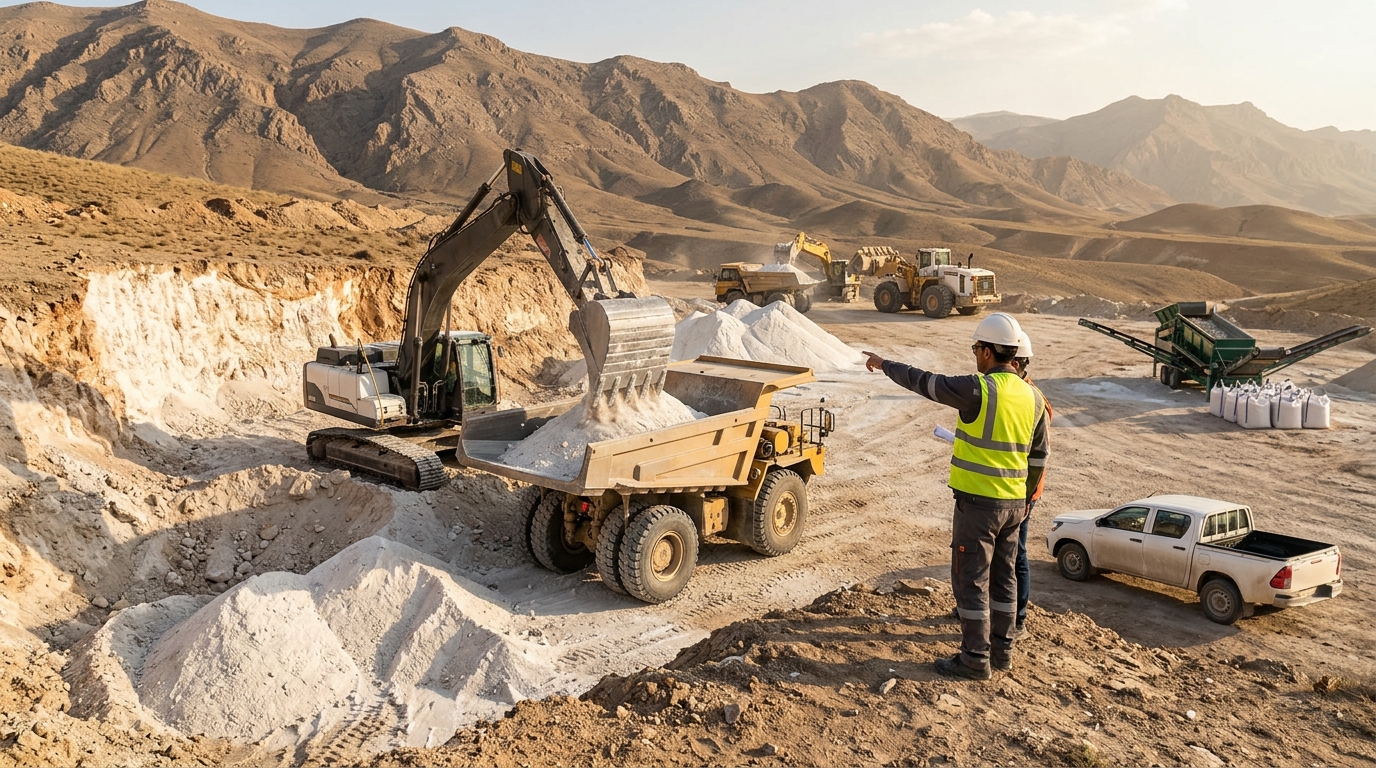
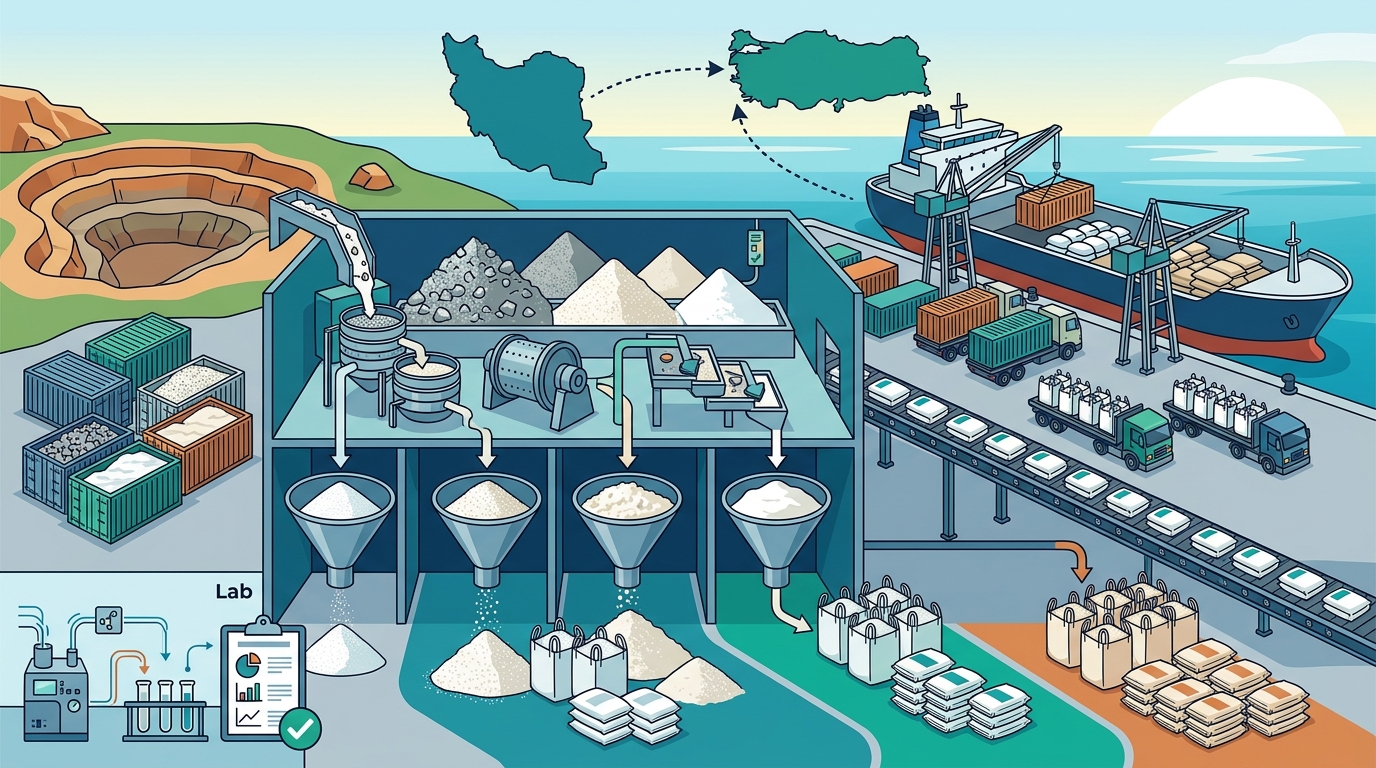
High-purity silica, feldspar, and kaolin are critical raw materials for glass and ceramic tile manufacturing in Turkey. Raiva International Trading Group (RAIVACO) exports these minerals directly from certified quarries in Iran to industrial buyers in Turkey and beyond. This guide covers the specific chemical requirements for glass and ceramics, the logistics of cross-border supply, and how to verify batch quality through published analyses.
Kaolin Suppliers for Ceramics and Paper
Kaolin is a hydrated aluminium silicate clay that serves as a primary body former in porcelain, sanitaryware, and technical ceramics. For ceramic tile plants, the whiteness of the fired body is the most critical quality metric, which is determined by the iron and titania content of the raw material. Raiva International Trading Group supplies bulk kaolin certified at 20.28% alumina with iron held to 0.15%, a specification that ensures a white-fired body suitable for high-end tile production.
Chemical Composition and Purity
The chemical analysis of kaolin is typically reported by oxide. A typical certified analysis for the bulk kaolin supplied by Raivaco includes 67.66% silica, 20.28% alumina, and 0.15% iron oxide. The loss on ignition is approximately 9.48%, which indicates the water content released during firing. These values are published on the product page and are verified by a batch-specific Certificate of Analysis for every shipment.
Physical Properties and Processing
Kaolin is supplied as lump or milled powder, with a minimum size of 40 mm for lump grades. The Mohs hardness ranges from 2 to 2.5, making it relatively soft and easy to process in ceramic mills. For paper coating and paint applications, the plate-shaped particle structure of kaolinite provides opacity and gloss control. Raivaco offers bespoke production services for calcined kaolin or specific brightness requirements if the standard grade does not match the target chemistry.
Turkish Silica, Feldspar, and Kaolin Exporters
Turkey is a major hub for glass and ceramic tile manufacturing, requiring consistent supplies of high-purity fluxes and body materials. While Turkey has domestic sources, many plants import from regional producers to optimize cost and quality. Raiva International Trading Group operates as a specialized trading house with direct access to resources in Iran, eliminating intermediaries and ensuring consistent quality for B2B partners in Turkey.
Silica and Quartz for Glass Batch
Silica is the primary component of glass, and its purity directly affects the clarity and chemical durability of the final product. Raivaco supplies high-purity quartz with silica content up to 99.7%, which is essential for container glass and architectural glazing. The product is available in various mesh sizes to suit different batching processes. The HS code for silica is 2505.10, and the material is shipped in bulk or jumbo bags with a batch-specific Certificate of Analysis.
Feldspar as a Fluxing Agent
Feldspar is an alkali feldspar that acts as a flux in glass and ceramic melts, lowering the melting temperature and improving the workability of the batch. Raivaco offers three distinct chemistries: a potassic grade at 11.80% K2O, a sodic grade at 9.40% Na2O, and a potassic-sodic blend. The potassic grade is suitable for glazes and slow-fired porcelain, while the sodic grade is preferred for fast-fired porcelain tile lines due to its lower melting point and thinner melt behavior.
Logistics and Trade Terms
Geographic proximity between Iran and Turkey facilitates efficient logistics for mineral exports. Raivaco ships from deep-water ports in Iran or via land borders, offering FOB, CFR, and CIF terms. The standard lead time for these minerals is 7 to 14 days, with a minimum order quantity of 25 MT for bagged shipments. This direct supply chain model ensures that Turkish plants receive materials that meet their exact specifications without the variability introduced by multiple middlemen.
| Material | Key Specification | HS Code | Typical Use in Glass/Ceramics |
|---|---|---|---|
| Kaolin | Al2O3 20.28%, Fe2O3 0.15% | 2507.00 | Porcelain body, paper coating |
| Silica | SiO2 up to 99.7% | 2505.10 | Glass batch, ceramic body |
| Feldspar (Potassic) | K2O 11.80%, Fe2O3 0.14% | 2529.10 | Glaze, slow-fired porcelain |
| Feldspar (Sodic) | Na2O 9.40%, Fe2O3 0.25% | 2529.10 | Fast-fired tile, sanitaryware |
Key Takeaways
- Kaolin whiteness is determined by iron content; Raivaco supplies grades with Fe2O3 as low as 0.15%.
- Silica purity up to 99.7% is required for high-clarity glass applications.
- Potassic feldspar suits glazes, while sodic feldspar is optimal for fast-fired tile lines.
- Direct sourcing from certified quarries eliminates intermediary variability in quality.
- Every shipment includes a batch-specific Certificate of Analysis for quality verification.
- Logistics from Iran to Turkey support efficient supply chains with standard lead times of 7-14 days.
- Bespoke production is available for custom chemistries, fineness, or packaging requirements.
Frequently Asked Questions
What is the minimum order quantity for silica, feldspar, and kaolin?
The minimum order quantity for bagged shipments of these minerals is 25 MT, which corresponds to one 20-foot container. Bulk vessel shipments are available for larger quantities, with a minimum of 500 MT for certain products.
How is the quality of the minerals verified?
Every batch is laboratory-tested and shipped with a batch-specific Certificate of Analysis. The published technical data sheets on the Raivaco website provide typical values, but the CoA confirms the actual chemistry of the specific shipment.
Can Raivaco supply custom grades of feldspar?
Yes, Raivaco offers bespoke production services. If the standard potassic, sodic, or blended grades do not match your target chemistry, fineness, or packaging, you can request a custom grade to your exact specification.
What are the typical lead times for delivery to Turkey?
Standard lead times for these minerals are 7 to 14 days. Actual delivery times depend on the Incoterms agreed upon (FOB, CFR, or CIF) and the specific logistics route chosen.
What is the difference between potassic and sodic feldspar?
Potassic feldspar contains higher potassium oxide (K2O) and melts stiff over a wide temperature range, making it suitable for glazes. Sodic feldspar contains higher sodium oxide (Na2O) and melts lower and thinner, which is ideal for fast-fired porcelain tile lines.
Does Raivaco supply other minerals for glass and ceramics?
Yes, Raivaco also supplies dolomite, calcium carbonate, and bentonite, which are commonly used in glass and ceramic formulations. Each product page includes full specifications and packing options.
Conclusion
For glass and ceramic tile plants in Turkey, sourcing high-purity silica, feldspar, and kaolin from a direct exporter ensures consistency and quality. Raiva International Trading Group provides these materials with published analyses, batch-specific certificates, and efficient logistics from Iran. To discuss your specific requirements or request a quote, contact our trade desk.