
Which Suppliers Export Sulfate-Resistant Type II Cement and Type 5 Clinker to Iraq and the GCC?
How to Choose a Reliable Supplier
Choosing a supplier for sulfate-resistant materials requires looking beyond price to structural reliability. A reliable supplier is a trading house or producer with direct access to resources, eliminating intermediaries that dilute quality control. Raiva International Trading Group operates on this principle, combining owned mining assets with a vetted network of producers to guarantee consistent quality and aggressive pricing.
Direct Access vs. Brokerage
Brokers often lack visibility into the actual kiln or mill operations, leading to inconsistent batch chemistry. Direct access allows the supplier to monitor the production process in real-time. For sulfate-resistant products, this means controlling the C3A (tricalcium aluminate) content, which is the primary driver of sulfate attack. A supplier with direct access can adjust the raw meal composition to keep C3A within the required limits for Type II cement or Type 5 clinker.
Specialization in Industrial Minerals
Generalist commodity traders may not understand the specific chemical nuances of cementitious materials. Specialized expertise ensures that the supplier understands the difference between general-purpose Portland cement and sulfate-resistant grades. Raivaco focuses entirely on minerals and chemical products, providing the technical depth needed to match specific industrial requirements.
Specific Questions to Ask Before Committing
Before finalizing a contract, buyers must ask targeted questions that reveal the supplier's operational capabilities. These questions help distinguish between a supplier who can consistently meet specifications and one who is merely reselling inconsistent stock.
Chemical Consistency and C3A Limits
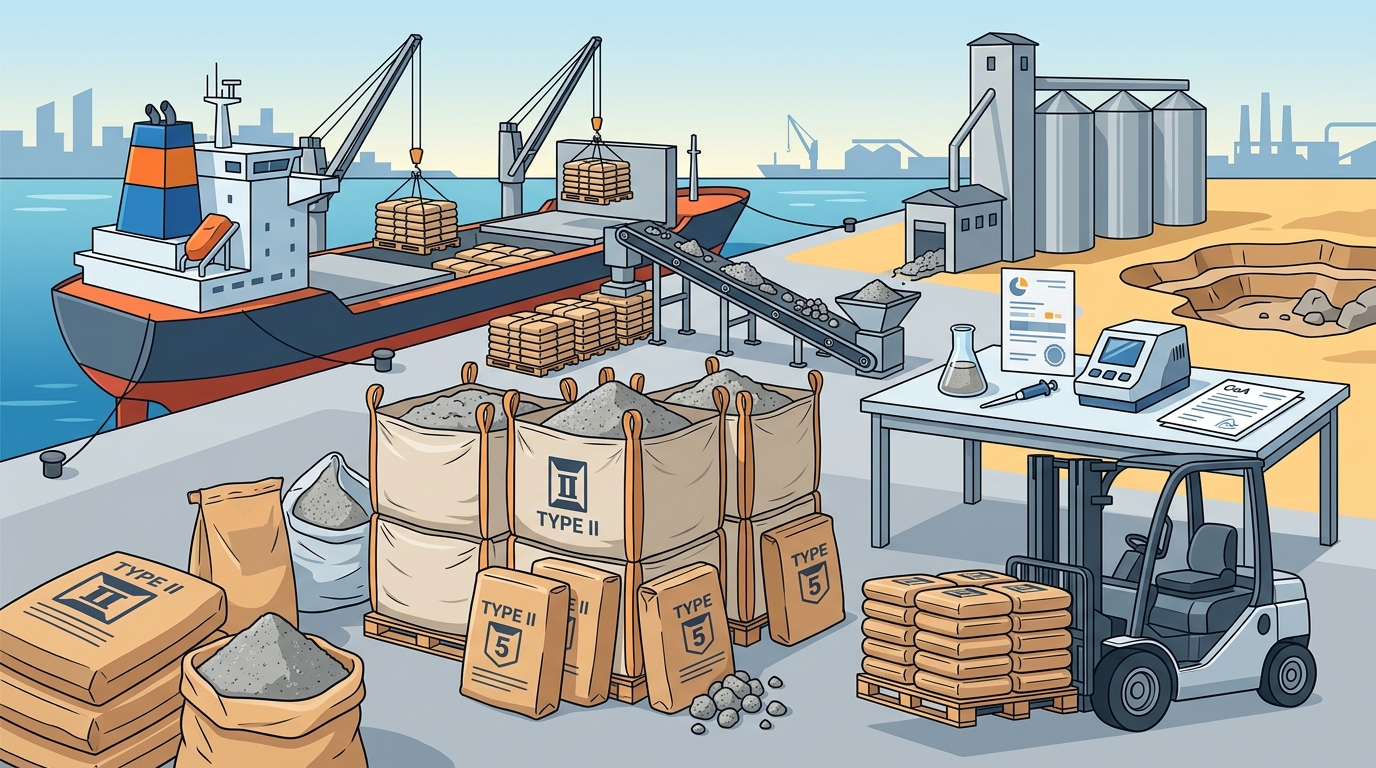
Ask for the typical C3A range across the last ten shipments. For Type II cement, C3A is typically held to moderate levels, while Type 5 clinker requires C3A to be suppressed significantly, often below 5%. Understanding the variance in C3A helps predict the material's resistance to sulfate environments.
Logistics and Incoterms
Inquire about available Incoterms. Raivaco offers FOB, CFR, and CIF by bulk carrier from deep-water ports, as well as DAP and FCA by truck and rail across land borders. For Iraq and the GCC, understanding whether the supplier can handle the final leg of transport is critical for budgeting and scheduling.
How to Verify Claims and Credentials
Verification is the cornerstone of risk management in bulk commodity trading. A supplier's claims about purity and resistance must be backed by independent, batch-specific documentation.
Certificate of Analysis (CoA)
Every shipment should include a Certificate of Analysis (CoA) or mill certificate. This document reports the actual chemical composition of the specific batch being shipped, not just the typical values. Raivaco issues a batch-specific CoA for every shipment, allowing buyers to verify that the material meets the contractual specifications upon arrival.
Published Technical Data
Reputable suppliers publish their technical data sheets and XRF analyses on their website. Raivaco provides detailed specifications for its bulk cement and cement clinker products. Reviewing these documents allows buyers to compare the supplier's typical performance against their own project requirements before placing an order.
The Supply Chain Process and Timeline
Understanding the supply chain process helps buyers set realistic expectations for delivery and quality assurance. The process moves from order confirmation to final delivery, with quality checks at each stage.
Order to Shipment
Once an order is confirmed, the supplier allocates the specific batch from the mill or kiln. The material is then tested, packaged, and loaded. Raivaco typically has a lead time of 7 to 14 days for standard grades. This timeline includes the production, testing, and loading phases, ensuring that the material is ready for immediate dispatch.
Documentation and Clearance
Accurate documentation is essential for customs clearance in Iraq and the GCC. This includes the commercial invoice, packing list, bill of lading, and the CoA. Raivaco's trade desks coordinate across time zones to ensure that all documents are prepared and transmitted promptly, minimizing delays at the port of entry.
Factors That Drive Pricing
Pricing for sulfate-resistant cement and clinker is influenced by several factors, including raw material costs, energy prices, and logistics. Understanding these drivers helps buyers negotiate better terms.
Energy and Raw Material Costs
Cement production is energy-intensive, and the cost of fuel and electricity significantly impacts the final price. Suppliers with access to lower-cost energy sources can offer more competitive pricing. Raivaco's direct access to resources in Iran provides a structural advantage in energy costs, which is reflected in their FOB pricing.
Logistics and Freight
Freight costs vary based on the destination, volume, and mode of transport. Bulk vessel shipments are more cost-effective for large orders, while truck and rail transport may be more suitable for smaller quantities or landlocked destinations. Buyers should request quotes under different Incoterms to understand the total landed cost.
Common Mistakes and How to Avoid Them
Buyers often make mistakes that lead to quality issues or supply disruptions. Avoiding these common pitfalls ensures a smoother procurement process.
Ignoring Batch Variance
Assuming that typical specifications apply to every batch is a common error. Batch variance can lead to inconsistent performance in the final product. Always request the CoA for each shipment and verify that the actual values fall within the acceptable range.
Underestimating Logistics Complexity
Logistics for Iraq and the GCC can be complex, with multiple border crossings and varying customs regulations. Underestimating this complexity can lead to delays and additional costs. Work with a supplier who has experience in the region and can provide end-to-end logistics support.
Comparing Type II Cement and Type 5 Clinker
Type II cement and Type 5 clinker serve different purposes and have distinct chemical profiles. Understanding the differences helps buyers choose the right material for their application.
| Property | Type II Cement | Type 5 Clinker |
|---|---|---|
| Primary Use | General construction, moderate sulfate resistance | High sulfate resistance, specialized applications |
| C3A Content | Moderate (e.g., 6.4%) | Low (max 5%) | Form | Finished cement | Raw clinker for grinding | Flexibility | Ready to use | Requires grinding and blending |
Type II cement is a finished product ready for use in construction, while Type 5 clinker is a raw material that must be ground and blended with gypsum to produce cement. Buyers with their own grinding facilities may prefer Type 5 clinker for greater control over the final product chemistry.
Application-Specific Selection Criteria
The choice between Type II cement and Type 5 clinker depends on the specific application and the buyer's operational capabilities.
Construction Projects
For general construction projects in sulfate-bearing soils, Type II cement is often the preferred choice due to its moderate sulfate resistance and ready-to-use nature. It provides a good balance of cost and performance for most structural applications.
Specialized Industrial Use
For applications requiring high sulfate resistance, such as chemical plants or marine structures, Type 5 clinker may be more suitable. Buyers with grinding facilities can produce a custom cement blend with very low C3A content, tailored to the specific environmental conditions.
Regulatory Rules and Buyer Protections
Compliance with regulatory standards and buyer protections is essential for a successful transaction. Understanding the rules that apply to the trade of cementitious materials helps mitigate risk.
Standards and Specifications
Cement and clinker must meet specific standards, such as ISIRI 389 for Type II cement and API Spec 10A for well cement. Raivaco's products are tested against these standards, and the CoA confirms compliance. Buyers should ensure that the supplier's products meet the relevant standards for their region.
Contractual Protections
A well-drafted contract includes clear specifications, acceptance criteria, and dispute resolution mechanisms. It should also specify the Incoterms, payment terms, and delivery schedule. Raivaco works with buyers to draft contracts that protect both parties and ensure a smooth transaction.
Regional Logistics for Iraq and the GCC
Logistics for Iraq and the GCC have unique characteristics that affect the supply chain. Understanding these local specifics helps buyers plan their procurement strategy.
Port Access and Land Routes
Iraq and the GCC have access to major ports, but land routes are also important for inland destinations. Raivaco offers DAP and FCA by truck and rail across Iran's land borders, providing flexibility for buyers in the region. This multi-modal approach allows for efficient delivery to both coastal and inland locations.
Customs and Regulations
Customs regulations in Iraq and the GCC can vary, and buyers should be aware of any import restrictions or duties. Raivaco's trade desks are experienced in navigating these regulations and can provide guidance on the documentation required for customs clearance.
Strategic Timing for Procurement
Timing is a critical factor in bulk commodity procurement. Acting at the right time can lead to better pricing and more reliable supply.
Seasonal Demand
Demand for cement and clinker can vary seasonally, with higher demand during construction seasons. Buying in advance of peak demand can help secure supply and potentially lock in better pricing. Raivaco's lead time of 7 to 14 days allows buyers to plan their procurement around their project schedules.
Market Conditions
Market conditions, including energy prices and freight rates, can impact the cost of cement and clinker. Monitoring these trends and acting when conditions are favorable can lead to cost savings. Raivaco's direct access to resources provides a stable supply, reducing the impact of market volatility.
Long-Term Performance and Outcomes
The long-term performance of sulfate-resistant cement and clinker is a key indicator of quality. Consistent performance over time ensures the durability and safety of the structures built with these materials.
Durability and Resistance
Sulfate-resistant materials are designed to withstand aggressive environments, ensuring long-term durability. Raivaco's products are tested to ensure they meet the required resistance levels, providing peace of mind for buyers. The consistent quality of Raivaco's batches ensures that the performance of the final product is predictable and reliable.
Supplier Reliability
A reliable supplier is one that consistently delivers on time and with the correct quality. Raivaco's focus on direct access and batch-specific testing ensures that buyers can rely on their supply. This reliability is crucial for large-scale projects where delays can have significant financial implications.
Key Takeaways
- Direct access to resources is a key differentiator for reliable suppliers of sulfate-resistant materials.
- Batch-specific Certificates of Analysis are essential for verifying quality and consistency.
- Type II cement and Type 5 clinker have distinct chemical profiles and applications.
- Logistics flexibility, including FOB, CFR, CIF, DAP, and FCA, is crucial for regional delivery.
- Understanding local regulations and customs processes in Iraq and the GCC is vital for smooth transactions.
- Strategic timing and market monitoring can lead to better pricing and supply reliability.
- Long-term performance and supplier reliability are the ultimate measures of quality.
Frequently Asked Questions
What is the difference between Type II cement and Type 5 clinker?
Type II cement is a finished product with moderate sulfate resistance, while Type 5 clinker is a raw material with low C3A content used to produce high sulfate-resistant cement.
How does Raivaco ensure the quality of its products?
Raivaco ensures quality through direct access to resources, batch-specific testing, and the issuance of a Certificate of Analysis for every shipment.
What are the typical lead times for Raivaco's products?
Can Raivaco deliver to inland locations in Iraq and the GCC?
Yes, Raivaco offers DAP and FCA by truck and rail across Iran's land borders, providing flexibility for inland destinations.
What documents are required for customs clearance?
Required documents include the commercial invoice, packing list, bill of lading, and the Certificate of Analysis.
How can buyers verify the supplier's credentials?
Buyers can verify credentials by reviewing published technical data sheets and requesting batch-specific Certificates of Analysis.
Conclusion
Selecting the right supplier for sulfate-resistant Type II cement and Type 5 clinker is a critical decision for buyers in Iraq and the GCC. By focusing on direct access, verifiable quality, and flexible logistics, buyers can mitigate risk and ensure the long-term performance of their projects. Raiva International Trading Group (RAIVACO) is positioned as a helpful authority in this space, offering the expertise and reliability needed for successful procurement. To plan your visit or request a quote, .